


Korean War Remembrance: British Dead, Prisoners, Veterans & the 'Forgotten War'
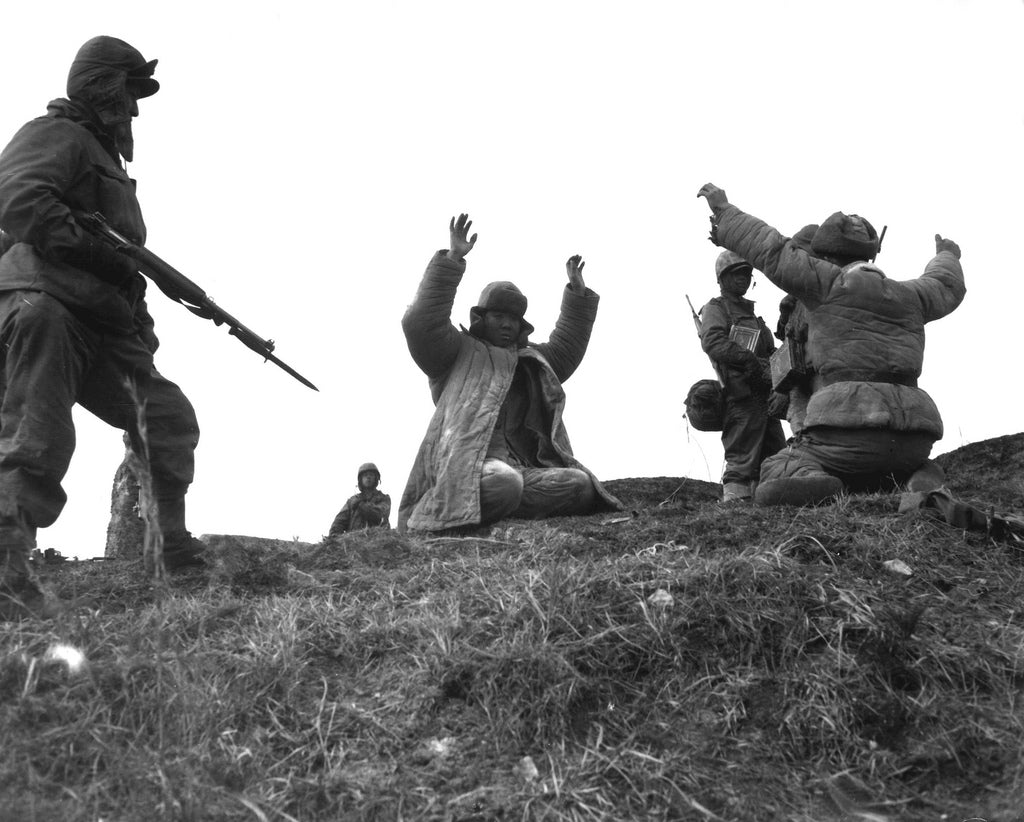
The Korean War is often called the 'Forgotten War'. For the families who lost someone, the men who came home wounded or from captivity, and the veterans who carried the experience for the rest of their lives, it was never forgotten.
Around 60,000 members of the British armed forces served in Korea. More than 1,100 were killed and thousands more were wounded. Hundreds experienced captivity. The scale was smaller than the world wars, but the human consequences were not.
This is a remembrance Field Note, not a commercial page. It contains no product funnel.
Why 'Forgotten War' became a phrase
Korea sat awkwardly in British public memory. The Second World War had ended only five years before the conflict began. National Service was still a normal part of life. Newspapers covered Korea, but it never acquired the same place in national remembrance as 1914–18 or 1939–45.
Veterans later described returning to a country that often had little sense of what they had experienced. The phrase 'Forgotten War' reflects that mismatch between the intensity of service and the limited space the conflict occupied in popular memory.
The dead
British servicemen were killed in infantry battles, artillery positions, patrols, accidents, naval operations and air service. The dead came from regular units and National Service alike.
Many Commonwealth dead are buried or commemorated at the United Nations Memorial Cemetery in Busan. Regimental memorials in Britain and Korea also preserve names and unit histories.
Numbers matter, but names matter more. A casualty total is useful for scale; remembrance begins when the number is broken back into individuals.
Prisoners of war
Capture was a major part of the British Korean War experience, particularly after battles such as the Imjin. Prisoners faced forced marches, poor food, disease, cold, interrogation and political pressure. Some spent more than two years in captivity before release after the armistice.
POW experience was not uniform. Conditions varied by camp and period. Historical accounts should therefore resist turning every prisoner's story into one standard narrative.
National Servicemen
Many soldiers in Korea had not chosen the Army as a career. National Service put young men into units that could be sent to an active war. Once deployed, the distinction between regular and National Serviceman mattered less to enemy fire.
Their experiences complicate simple ideas about post-war Britain being at peace. The country had demobilised from a world war, yet another generation was soon fighting on the other side of the world.
Veterans and memory
Veterans' associations, regimental museums and memorial groups kept Korea visible when wider public attention moved elsewhere. Anniversaries of the Imjin, Kapyong, the Hook and the armistice became important points of remembrance.
The veterans' testimony also corrected the tendency to describe Korea only through high-level Cold War strategy. Their accounts bring back the weather, terrain, trench life, patrols, fear, boredom, comradeship and aftermath.
Commonwealth remembrance
British memory sits within a wider Commonwealth and UN story. Canadian, Australian, New Zealand, Indian and other forces served alongside British units. South Korean civilians and soldiers suffered on a vastly larger scale, while Chinese and North Korean families also lived with enormous losses.
Remembering one's own dead does not require forgetting everyone else's.
The armistice is not a peace treaty
The fighting ended with the armistice of 27 July 1953. It created the Demilitarized Zone and a mechanism for maintaining the ceasefire. It did not produce a final peace treaty. The political division of the peninsula therefore remains part of the conflict's living legacy.
How to research a British Korean War serviceman
- Start with the full name, service number and regiment or corps.
- Check Commonwealth War Graves Commission records for those who died.
- Use regimental museums and archives for war diaries, casualty lists and battalion histories.
- Look for medal records, local newspaper reports and veterans' association material.
- Where possible, compare family recollections with official records rather than treating either as complete on its own.
Sources and evidence used
- National Army Museum — Korean War, including British service and casualty context.
- Commonwealth War Graves Commission records.
- Imperial War Museums oral histories and War Memorials Register.
- Regimental museums and veterans' association archives.
