


Major General Robin Brims: 1 (UK) Armoured Division & the Invasion of Iraq 2003
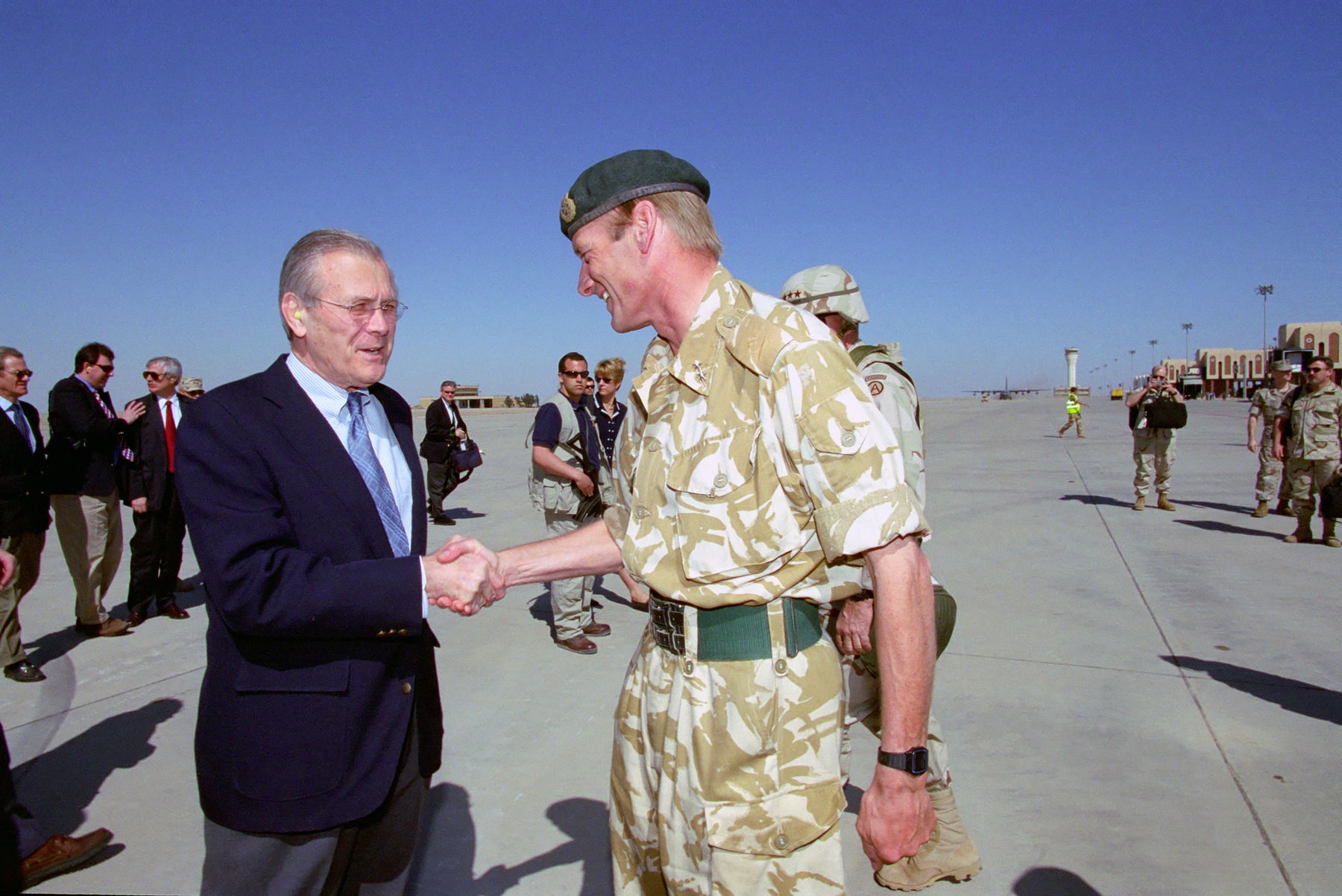
Major General Robin Brims commanded 1 (UK) Armoured Division during the opening phase of Operation TELIC in 2003. His headquarters controlled the principal British land formation in the invasion, including 7 Armoured Brigade, 16 Air Assault Brigade and divisional troops, with 3 Commando Brigade Royal Marines under operational command.
Before Iraq
Robin Vaughan Brims joined the British Army in 1970 and served with The Light Infantry. His career included battalion command and command of 24 Airmobile Brigade before he became General Officer Commanding 1 (UK) Armoured Division.
By early 2003 the division was preparing for a large-scale conventional operation very different from the peace-support deployments in Bosnia and Kosovo familiar to many British soldiers of the period.
1 (UK) Armoured Division
National Army Museum and parliamentary records identify Brims as commander of the British division at the heart of Operation TELIC. Its principal formations included 7 Armoured Brigade, equipped with Challenger 2 tanks and Warrior infantry fighting vehicles; 16 Air Assault Brigade; and divisional support. Brims later told the House of Commons Defence Committee that his wartime command also included 3 Commando Brigade.
That combination gave the division armour, air-assault infantry, Royal Marines, artillery, engineers, logistics, aviation and other supporting capabilities. The invasion therefore depended on integration rather than one famous vehicle or regiment.
The southern Iraq mission
British forces entered Iraq from Kuwait in March 2003. Royal Marines operated around the Al-Faw Peninsula and Umm Qasr while the division fought in the Basra area and secured southern routes and infrastructure.
Basra was not simply bypassed on the road to Baghdad. British forces were responsible for containing Iraqi formations, protecting key infrastructure and eventually taking control of a city of more than a million people while trying to limit unnecessary destruction.
6–7 April: entering Basra
By early April the conventional Iraqi defence around Basra was weakening. Brims decided to commit British forces into the city from multiple directions. US Army official history records Basra as under British control by the morning of 7 April.
The rapid military success created an immediate transition problem: forces organised to defeat Iraqi units now had to police streets, protect infrastructure, deal with looting, restore order and work with a collapsed state apparatus.
Command after the battle
That transition is one of the most important parts of Brims’s TELIC story. Winning control of Basra did not answer what political authority, policing and local institutions would replace the Ba’athist system. The division’s task therefore changed in days from conventional manoeuvre warfare to the first phase of occupation and stabilisation.
My own service background was infantry mortar work rather than armoured-divisional command, and my Afghanistan tour came later. What stands out is the change of mission. A formation can be designed and trained for battle, execute that battle successfully, and then inherit a completely different problem almost overnight. Firepower and manoeuvre remain useful, but they do not automatically provide policing, governance or political legitimacy.
Later career
Brims later served as Commander Field Army. He retired from the British Army in 2008 after a career spanning nearly four decades.
Return to Log 047 — Operation TELIC campaign guide →
Sources & further research
- National Army Museum — Iraq War: The invasion
- House of Commons Defence Committee — evidence from Major General Robin Brims, 25 June 2003
- US Army Combat Studies Institute — Iraq publications, including On Point: The United States Army in Operation Iraqi Freedom
- Wikimedia Commons / US Department of Defense — Brims photograph and public-domain record
I focus this biography on Brims’s documented role commanding 1 (UK) Armoured Division during the invasion and immediate transition in Basra. I do not attribute later policy decisions or the entire subsequent British occupation to one operational commander.
