


Operation TELIC 2003–2011: Complete British Iraq Campaign Guide — Invasion, Basra, Insurgency & Withdrawal // Log 047
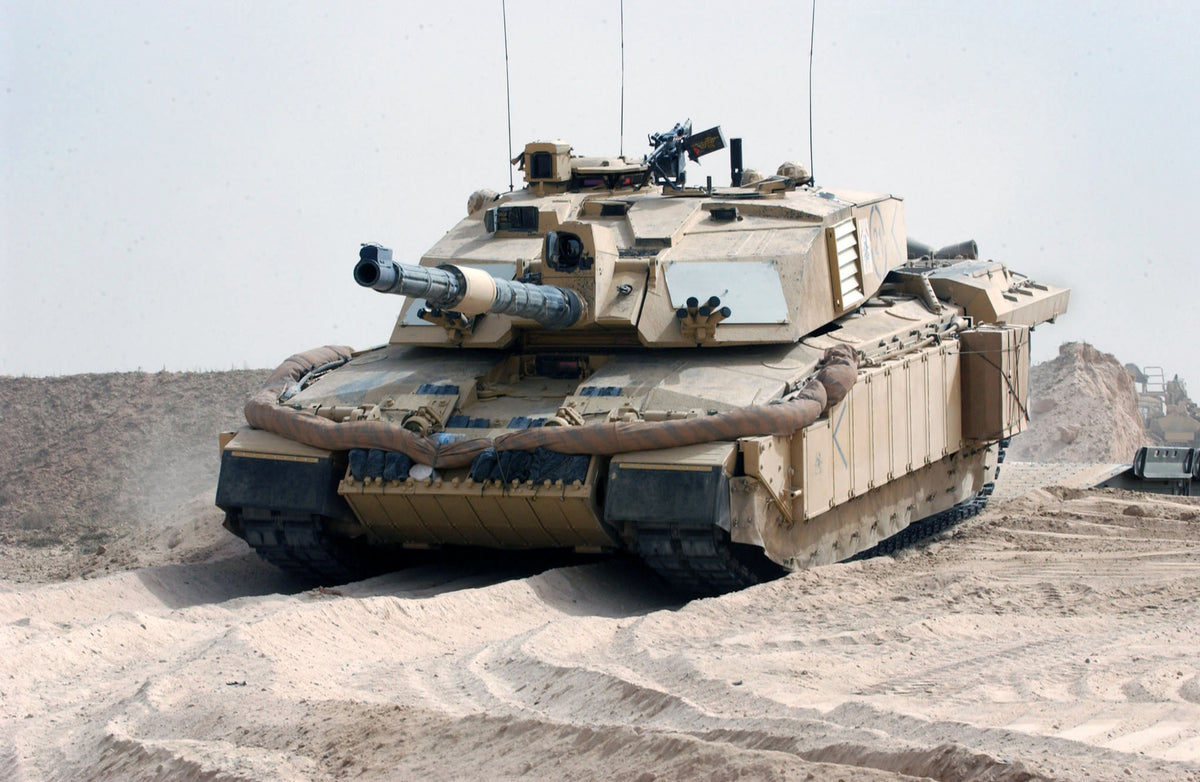
I do not think Operation TELIC makes sense if it is written as one continuous type of war. British troops entered Iraq in 2003 as part of a conventional invasion. Within weeks they were dealing with security, administration and a collapsing state. The campaign then moved through occupation, insurgency, militia conflict, training Iraqi forces, shrinking bases and finally withdrawal.
That is the thread I follow here. The dates matter, but so does the change in what the soldiers on the ground were actually being asked to do.
2003: invasion
British forces formed the principal coalition land component in southern Iraq. 1st (United Kingdom) Armoured Division operated alongside US forces while Royal Marines and other units secured the Al-Faw Peninsula, port facilities and oil infrastructure.
Basra became the main British objective in the south. British forces isolated the city, fought Iraqi regular and paramilitary forces around its outskirts and entered central Basra in early April. Challenger 2 tanks and armoured infantry were central to the conventional fight.
The military victory was fast. What followed was not. Looting, failing public services and the collapse of the old state created a security vacuum almost immediately.
Log 048 — Basra 2003–2009, including Jamie's TELIC 3, 6 and 10 account →
The British southern zone
Under the post-invasion coalition structure, the UK led Multi-National Division (South East), responsible for Basra, Maysan, Dhi Qar and Al Muthanna. Headquarters was at Basra Palace.
The force found itself doing things far beyond conventional warfighting: patrols, infrastructure protection, crowd control, intelligence, border activity, mentoring police and army units and supporting a new political order.
This is where a clean campaign map starts to become misleading. A formation can defeat the army in front of it and then inherit a political, policing and institutional problem that armour and infantry alone cannot solve.
From Jamie — three very different Iraqs
I have left Jamie's full account in Log 048 rather than slicing it into anonymous “veteran perspective” boxes throughout this guide. It is more useful there because the progression itself is the point: first contacts and incoming mortar on TELIC 3; VCPs, helicopter VCPs and Iran–Iraq border patrols on TELIC 6; then Basra Palace resupply, the Red Route, IED strikes, contacts and relentless indirect fire on TELIC 10.
Occupation and legitimacy
The Coalition Provisional Authority dissolved the Iraqi Army and pursued de-Ba'athification measures that removed many officials from state institutions. These decisions affected security and governance throughout Iraq.
The southern provinces differed from the Sunni-majority insurgency that developed around Baghdad and Anbar, but they were not peaceful. Political parties, militias, criminal networks and competing Shia movements struggled for influence.
2004: Mahdi Army and Al-Amarah
In 2004 forces associated with Muqtada al-Sadr's Mahdi Army confronted coalition troops in several Iraqi cities. British forces in Maysan and Basra faced increasing attacks.
On 14 May a planned insurgent ambush north of Al-Amarah developed into the engagement known as the Battle of Danny Boy. Twenty-eight Iraqi fighters were killed and nine were captured. The later Al-Sweady Inquiry examined serious allegations about what happened during and after the battle.
Jamie had travelled that route on TELIC 3 before the battle took place. He was not at Danny Boy, and I keep that distinction explicit.
Log 049 — Danny Boy and the Al-Sweady Inquiry →
Basra's changing threat
Over the following years British forces faced roadside bombs, indirect fire, small-arms attacks, political pressure and increasingly capable militia networks. The threat had moved far away from the regular Iraqi formations defeated in 2003.
Basra also mattered economically. Oil infrastructure and access to the Gulf meant control of the city and its institutions reached far beyond the immediate security picture.
2006–07: pressure and contraction
British patrol patterns and basing changed as attacks intensified. Bases inside Basra came under repeated rocket and mortar fire. The Old State Building, Shatt al-Arab Hotel and Shaibah Logistics Base were among sites handed over during 2007, followed by Basra Palace in September.
The British Government described the process as transition. Critics described it as retreat from a city in which militia influence had grown. I do not think the history is improved by choosing one label and pretending the other argument did not exist. Responsibility was being transferred, but British freedom to dominate Basra directly had also narrowed.
TELIC 10: the human cost
The language of transition is especially sterile if the people killed during it disappear from the story.
On 28 June 2007, Corporal Paul Joszko of 2 Royal Welsh was killed in south-east Basra by an improvised explosive device alongside Private Scott Kennedy and Private James “Jamie” Kerr, both of The Black Watch, 3rd Battalion The Royal Regiment of Scotland and attached to 2 Royal Welsh for TELIC 10. They had dismounted from a Warrior patrol during route security for a sustainment convoy.
On 7 July 2007, Lance Corporal Ryan Francis of 2 Royal Welsh was killed when an IED detonated against the Warrior he was driving during an operation in Basra.
On 6 August 2007, Private Craig Barber of 2 Royal Welsh was killed by small-arms fire while driving a Warrior during a night operation in the Al Fursi district. I keep that cause of death explicit because Craig's death should not be incorrectly folded into the IED narrative surrounding other losses that summer.
What TELIC 10 looked like from the front of the convoy
Jamie describes his platoon as normally being in the first vehicles of the long convoy resupplying Basra Palace. His memory is of having to fight their way in repeatedly, with drones marking targets and fast air carrying out shows of force.
Rather than translate that into detached prose, I think his own words are clearer:
That first-hand account does not prove every statistical claim made about the intensity of indirect fire in Basra, and I do not use it that way. It tells us something different: what the operating environment felt like to someone repeatedly moving through it.
2008: Charge of the Knights
In March 2008 Iraqi Prime Minister Nouri al-Maliki launched an Iraqi-led offensive in Basra against militia networks, particularly the Mahdi Army. The operation initially exposed weaknesses in Iraqi planning and coordination.
British and US forces provided intelligence, air, artillery, logistics and other support while Iraqi forces continued the operation. The fighting ultimately strengthened Iraqi government control over the city, though political negotiation and militia ceasefire decisions also mattered.
I avoid both easy versions of the story: Britain did not storm back into Basra and retake it, but British forces were not irrelevant either. It was an Iraqi-led operation with significant coalition support.
2009: main combat mission ends
By 2008–09 the British role increasingly focused on training and mentoring Iraqi forces rather than independently controlling terrain. The main UK combat mission ended in 2009 and the majority of British combat forces withdrew from southern Iraq.
2011: formal end of TELIC
Royal Navy personnel continued training the Iraqi Navy after the main land force left. The UK-Iraq Training and Maritime Support Agreement ended in May 2011, which the Ministry of Defence described as the formal conclusion of Operation TELIC.
British casualties and the wider Iraqi cost
179 British service personnel died during the Iraq operation from March 2003 through the main UK military involvement. Many more were wounded or injured.
Iraqi military, police, insurgent and civilian losses were vastly higher and far harder to reduce to one uncontested figure because different organisations used different categories, time periods and methods.
What came after
Iraq remained politically unstable. US forces also withdrew in 2011, but Islamic State later captured Mosul and large areas of Iraq in 2014. British forces returned to operations over Iraq under Operation SHADER. SHADER is a different operation with a different legal and strategic context, and I keep it separate from TELIC.
Related Gallus pieces
I place the campaign products here, after the remembrance material rather than through it.
- Basra 2003 Military Map T-Shirt
- Challenger 2 Op TELIC T-Shirt
- Battle of Danny Boy T-Shirt
- Basra 2007 Street Scene T-Shirt
- Op TELIC Basra & Al-Amarah T-Shirt
- Operation TELIC Southern Provinces Hoodie
- Fallujah 2004 Map T-Shirt — part of the wider Iraq war, not a British assault on Fallujah city.
Sources and further reading
- Imperial War Museums — Operation TELIC collection material
- Ministry of Defence — formal end of Operation TELIC
- Iraq Inquiry — UK involvement 2001–2009
- Al-Sweady Inquiry
- MOD — Joszko, Kennedy and Kerr, 28 June 2007
- MOD — Lance Corporal Ryan Francis, 7 July 2007
- MOD — Private Craig Barber, 6 August 2007
I keep the campaign chronology source-led, use my own voice for the interpretation and mark Jamie's first-hand contributions as his. His TELIC memories stay his, and remembrance stays separate from sales copy.
