


Korea 1945–1950: The Political Road to War — Partition, Occupation, Rival States & the June 1950 Invasion
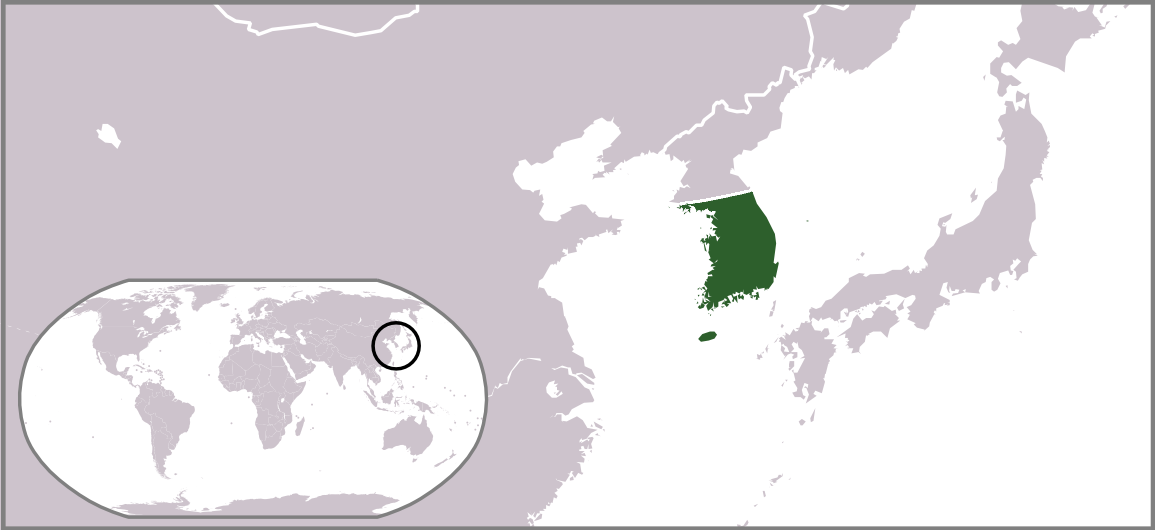
The Korean War did not begin from nowhere on 25 June 1950. The invasion was the immediate trigger, but the road to war had been built through occupation, partition, rival governments, Cold War confrontation and violence inside Korea.
This Field Note keeps political context separate from the battlefield narrative. For the military campaign after June 1950, see the Korean War campaign guide.
1945: liberation and partition
Korea had been under Japanese colonial rule since 1910. Japan's surrender in August 1945 ended that occupation, but it did not immediately produce a unified Korean state. Soviet forces accepted the Japanese surrender north of the 38th Parallel and American forces did so to the south.
The line was initially an administrative expedient. It quickly hardened as relations between the Soviet Union and United States deteriorated.
Two occupation zones
In the north, Soviet authorities backed political structures that brought Kim Il Sung to prominence. In the south, the United States Military Government faced political instability, competing nationalist movements and strong anti-communist forces.
Efforts to create a single government failed. The emerging Cold War turned Korea into one of several places where former wartime allies now viewed each other's influence as a strategic threat.
1948: rival Korean states
In 1948 the Republic of Korea was established in the south under Syngman Rhee. The Democratic People's Republic of Korea followed in the north under Kim Il Sung. Both claimed legitimacy over the whole peninsula.
The border was not peaceful. Clashes, raids and political violence continued. In the south, uprisings and government repression added another layer to the conflict. The later war cannot be understood solely as an external Cold War proxy fight; Koreans had their own political struggles, ambitions and grievances.
Explore this history
Continue from this Field Note into the closest Gallus campaign and military-history collection.
Withdrawal and calculation
Soviet and most American occupation forces withdrew, although both sides continued to provide advice and equipment to their Korean allies. North Korea built a stronger conventional army with Soviet tanks and artillery. South Korea's forces were less well equipped for a major armoured invasion.
Kim Il Sung sought support for reunification by force. Stalin eventually approved the plan under conditions shaped by wider Cold War calculations, while China had recently emerged from its own civil war.
25 June 1950
North Korean forces crossed the 38th Parallel in a coordinated invasion on 25 June 1950. Seoul fell rapidly. The United Nations Security Council condemned the attack and called on member states to assist South Korea.
The Soviet Union was boycotting the Security Council at the time over the issue of Chinese representation and therefore did not use its veto. The United States led the military response, joined by Britain and other UN members.
Why Britain became involved
Britain's decision reflected several pressures: support for the United Nations system, alliance with the United States, fear of further communist expansion and the credibility of collective security after the failures of the 1930s.
The commitment developed from naval and air support into a substantial land force. British troops would fight at places such as the Imjin and the Hook, while Commonwealth contingents were eventually organised within the 1st Commonwealth Division.
Political interpretations
The origins of the war remain part of wider debates about the early Cold War. There is firm evidence that North Korea launched the conventional invasion in June 1950. That fact does not erase the preceding civil conflict, border violence or the role of outside powers in creating rival states.
A useful history holds both levels at once: the invasion had a clear direction, while the political crisis that made it possible had deeper roots.
Continue exploring
Sources and evidence used
- National Army Museum — Korean War.
- United Nations Security Council records from June 1950.
- Declassified Soviet documentation on North Korean planning and Stalin's approval.
- Major academic histories of Korea's liberation, division and early Cold War politics.
