


Battle of Danny Boy 2004: Ambush, Counter-Attack & the Al-Sweady Inquiry // Log 049
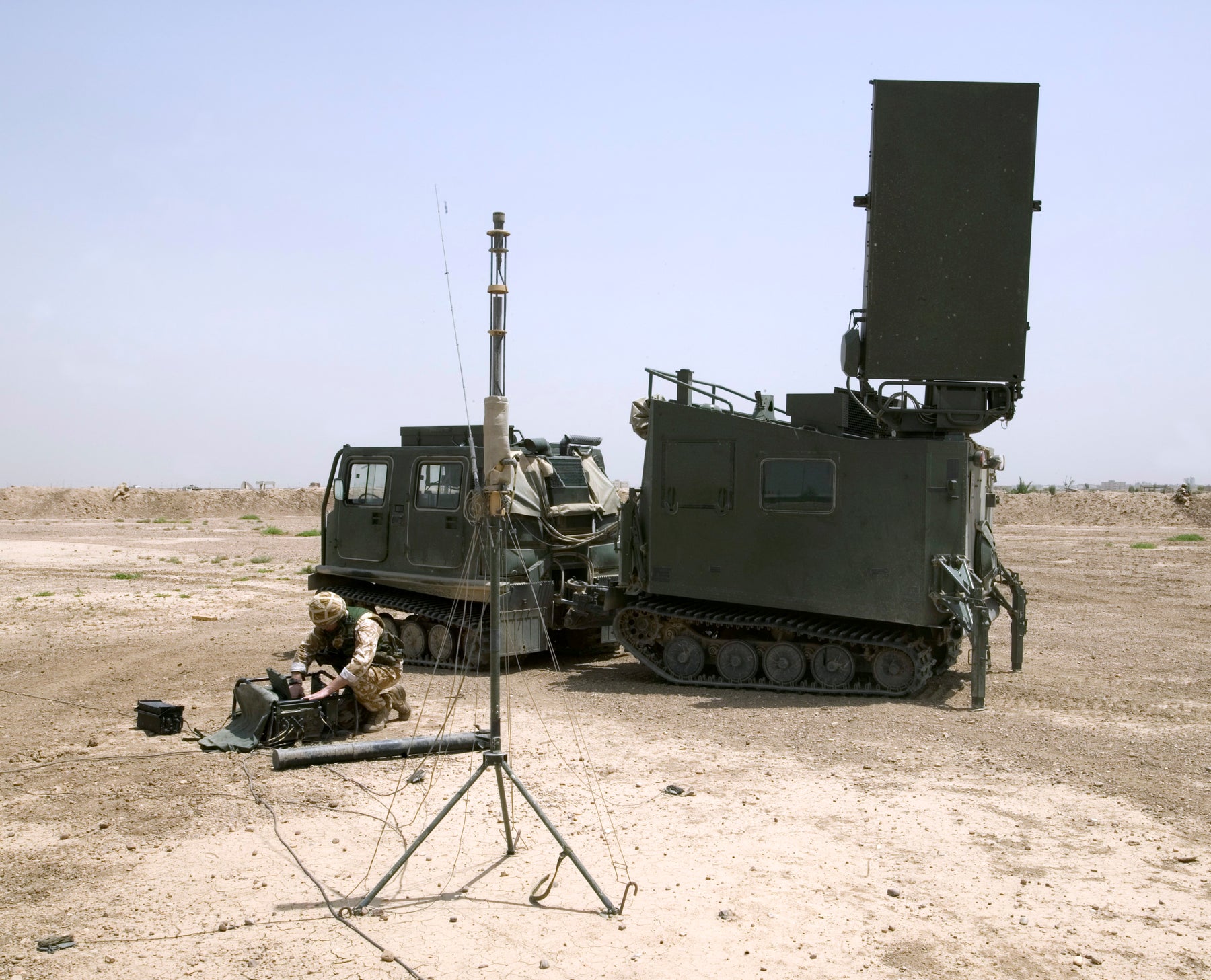
The Battle of Danny Boy on 14 May 2004 is one of the most intensely investigated British Army actions of the Iraq campaign. The firefight itself was violent and relatively short. What followed lasted for a decade: allegations that British soldiers had unlawfully killed captured Iraqis and mistreated detainees, a public inquiry involving hundreds of witnesses, and a final report that rejected the murder allegations while still identifying genuine failings in detainee treatment.
For me, a serious account has to do two things at once: describe the battle accurately and describe the inquiry accurately. Turning it into either a triumphalist “last bayonet charge” story or a blanket abuse narrative loses the evidence in opposite directions.
I served for 12 years with The Royal Welsh as a mortarman. I was not at Danny Boy. What interests me is the practical side of the engagement: how an ambush develops, how separate groups become one battle, how armoured infantry and dismounted troops reinforce one another, and how decisions made after the firing stops can become almost as historically important as the contact itself.
At a glance
- Date: 14 May 2004.
- Location: Route 6 near the permanent vehicle checkpoint code-named Danny Boy, about 5 km north-east of Al Majar al-Kabir, Maysan Province.
- British formations involved: soldiers of 1st Battalion The Argyll and Sutherland Highlanders and 1st Battalion The Princess of Wales’s Royal Regiment, with Warrior IFVs and other supporting elements.
- Higher command: 1 Mechanised Brigade, Multi-National Division (South East).
- Trigger: a planned, coordinated armed ambush by Iraqi insurgents.
- Result: 28 Iraqis killed in the fighting; 9 live Iraqis detained; British soldiers wounded but no British fatalities in the battle.
- Later inquiry: Al-Sweady Inquiry, report published 17 December 2014.
The ground: Route 6 and the checkpoint
Danny Boy was the military code name for a permanent vehicle checkpoint on the main road linking Basra and Al-Amarah, close to the junction for Al Majar al-Kabir. The road mattered because it carried military and civilian traffic through an area where British troops faced both hostile armed groups and a politically sensitive local population.
The Al-Sweady Inquiry divided the battle broadly into a Northern Battle and a Southern Battle. I find that distinction useful because Danny Boy was not a tidy single firing line. Separate groups of British soldiers became engaged at different points as the ambush unfolded, and reinforcements moved from Camp Abu Naji toward the contact.
The political and operational context
By May 2004 the invasion phase was over but southern Iraq was increasingly violent. Coalition forces were confronting insurgents and armed Shia groups while attempting to build Iraqi institutions and prepare for a transfer of sovereignty.
Maysan had its own tensions. The previous year, six Royal Military Police soldiers had been murdered in Al Majar al-Kabir. The unresolved killings remained a major issue for British commanders and influenced the decision made after Danny Boy to bring Iraqi bodies back for identification.
That later decision matters. Normally enemy dead would have been left where they fell. On 14 May, British troops were ordered to collect bodies from the battlefield so they could be checked for a suspected connection to the 2003 RMP murders. That created the circumstances in which rumours and later allegations about deaths at Camp Abu Naji could develop.
Order of battle — useful level
British
- 1 Mechanised Brigade — responsible for Maysan and Basra, commanded by Brigadier Andrew Kennett.
- 1st Battalion, Princess of Wales’s Royal Regiment (1 PWRR) — the battle group in whose area of operations the fight occurred.
- C Company, 1 PWRR — including 9 Platoon and Warrior infantry fighting vehicles that deployed as a quick-reaction element.
- 1st Battalion, Argyll and Sutherland Highlanders — soldiers from 6 and 7 Platoons were among those engaged in the initial fighting.
- Supporting elements within the brigade/battle-group structure, including armour, reconnaissance, engineers, medical and other support as the action developed.
Iraqi insurgents
The Inquiry described the attackers as a large group of heavily armed Iraqi insurgents conducting a planned and coordinated ambush. They used small arms and rocket-propelled grenades and occupied positions on both sides of the checkpoint area. The Inquiry was not reconstructing a conventional Iraqi unit order of battle, so I am not going to invent one where the primary source does not provide it.
14 May 2004 — how the battle developed
British vehicles belonging to the Argyll and Sutherland Highlanders were ambushed near Danny Boy. Fighting developed south of the checkpoint while other insurgent positions north of it engaged British troops.
At Camp Abu Naji, 9 Platoon C Company 1 PWRR was meant to be on a rest day but had a secondary Quick Reaction Force role. As reports of serious fighting came over the battlegroup net, Warrior crews formed up and deployed toward the contact.
The Inquiry’s reconstruction is a good reminder of what real battles look like from inside them: radio traffic, uncertain location reports and people making decisions before the whole picture is clear. Crews knew British troops were in contact and casualties needed help, but the exact tactical situation was still developing as the Warriors moved.
Fighting involved Warrior-mounted troops and dismounted soldiers assaulting insurgent positions. The battle became close and violent, including engagement of trench positions. By the end of the action 28 Iraqi insurgents had been killed and nine live Iraqis had been captured.
The bodies and the identification order
Twenty Iraqi bodies were collected from the battlefield and taken to Camp Abu Naji. The purpose was identification, driven by the possibility that individuals linked to the murder of the six RMP personnel in 2003 might have been among the dead. Other Iraqi dead remained on the battlefield.
The bodies were returned to Iraqi civilians the following day. Their condition caused distress and suspicion. Rumours developed that some men had not died in the battle at all but had been taken alive to the camp and killed there.
Those allegations became the core of what eventually became the Al-Sweady Inquiry.
The Al-Sweady allegations
The most serious claims were that British soldiers had unlawfully killed Iraqi detainees at Camp Abu Naji and tortured or seriously abused surviving detainees. Legal proceedings and several investigations preceded the creation of a statutory public inquiry in 2009, chaired by Sir Thayne Forbes.
The Inquiry undertook an enormous evidential exercise. It identified more than a thousand potential witnesses, gathered military, medical, photographic and documentary evidence and heard extensive oral testimony.
What the Inquiry actually found
The final report, published in December 2014, found that the most serious allegations were without foundation. The Iraqi men alleged to have been murdered at Camp Abu Naji had been killed during the battle. The nine live detainees had been active participants in the armed ambush before their capture.
That conclusion does not mean every aspect of British conduct was endorsed. The Inquiry found instances of ill-treatment during detention and tactical questioning and made nine recommendations addressing practices it considered unsatisfactory or deficient. The Government accepted the recommendations in principle.
Why Danny Boy became bigger than the battle
Most firefights disappear from public memory unless they produce major casualties or strategic consequences. Danny Boy became different because the post-battle handling of bodies and detainees created a second story involving law, evidence, military detention and public trust.
To me, that is one of the most useful things about the case. The end of firing is not necessarily the end of an operation. Decisions about evidence, bodies, prisoners, medical care, questioning and records can determine how an engagement is understood years later.
Myth: “the last British Army bayonet charge”
Danny Boy is sometimes promoted online as the “last British bayonet charge.” I think that label is too neat. Bayonets were used in close fighting and the engagement has become associated with them, but British troops have conducted later actions involving fixed bayonets. I would rather keep the complicated, heavily documented fight than turn it into a one-line internet superlative.
Chronology
- 14 May 2004, afternoon: British troops are ambushed near the Danny Boy checkpoint on Route 6.
- Battle develops: fighting occurs north and south of the checkpoint; reinforcements including 1 PWRR Warrior crews deploy from Camp Abu Naji.
- End of battle: 28 Iraqi insurgents have been killed; nine live Iraqis are captured.
- 14 May evening: 20 Iraqi bodies and the nine detainees are taken to Camp Abu Naji.
- 15 May: bodies are returned; detainees transfer onward to the Divisional Temporary Detention Facility at Shaibah.
- 2009: Government announces the Al-Sweady public inquiry.
- 2013–14: extensive oral hearings.
- 17 December 2014: final report rejects the serious unlawful-killing allegations and records some instances of detainee ill-treatment.
Wear the history
I have kept the product link after the documentary and legal history rather than interrupting it.
Battle of Danny Boy T-Shirt — Iraq, 14 May 2004 →
Sources and further reading
- Al-Sweady Inquiry — full report and chapter downloads
- Al-Sweady Inquiry — publication statement and executive findings
- The National Archives — Al-Sweady Inquiry records
- Gallus Log 048 — Basra 2003–2009
I use the 2014 Inquiry as the principal source for this article, separating what it established about deaths in battle from what it found about later detainee treatment. Where the official record is more nuanced than the internet version, I keep the nuance.
