


Lieutenant Colonel Terence Otway DSO: Merville Battery, 9 Para & the D-Day Decision to Attack
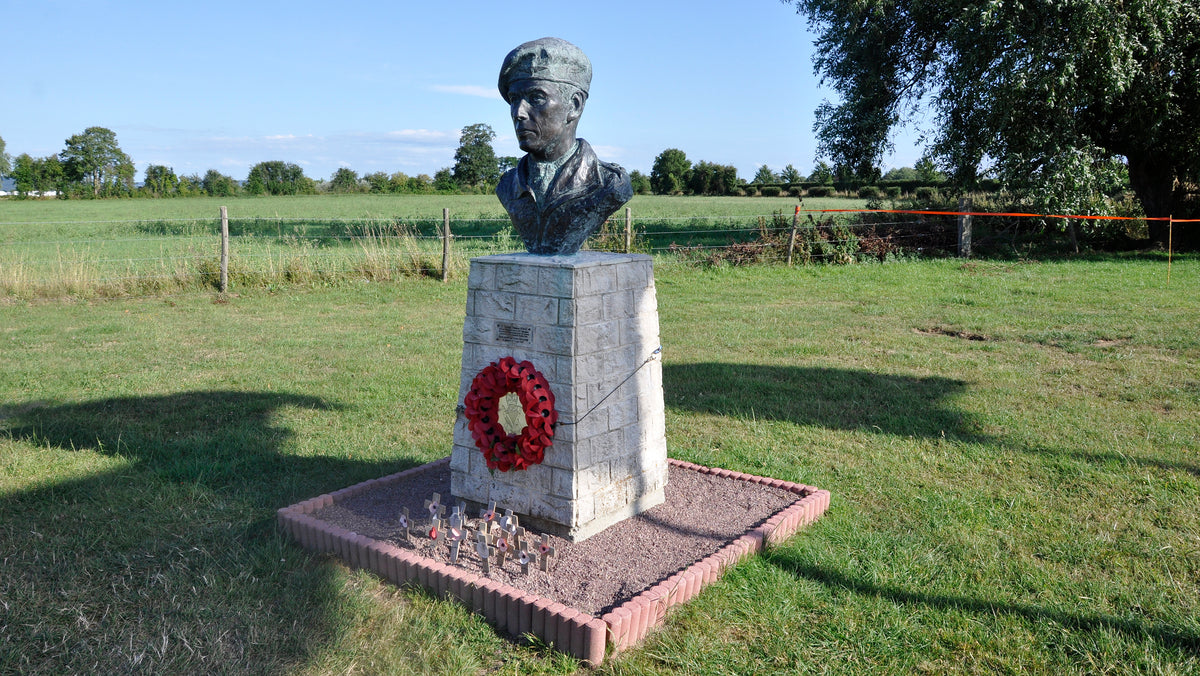
Lieutenant Colonel Terence Brandram Hastings Otway DSO commanded 9th (Essex) Parachute Battalion during the assault on the Merville Battery in the opening hours of D-Day. The action is remembered because his battalion attacked despite arriving at the rendezvous with only a fraction of the men and specialist equipment built into the plan.

Before the Parachute Regiment
Otway was born in Cairo in 1914 and commissioned into the Royal Ulster Rifles in 1934 after Sandhurst. His pre-war and early-war service included Hong Kong, Shanghai, India and the North-West Frontier. He later attended Staff College and worked at the War Office before returning to regimental service.
He joined 9th Parachute Battalion and became its commanding officer in early 1944, immediately taking responsibility for one of 6th Airborne Division’s most technically difficult D-Day tasks.
The Merville problem
Allied intelligence believed the Merville coastal battery contained four 150 mm guns capable of threatening Sword Beach and invasion shipping. The position was protected by concrete casemates, wire, mines, trenches and machine-gun positions.
Otway planned an assault with roughly 650 men and a carefully layered package of reconnaissance, engineers, anti-mine equipment, specialist weapons, medical support and gliders intended to deliver additional assault elements and equipment.
In the briefing-room version of the operation, those pieces arrived in sequence. Normandy did not cooperate.
The drop scatters the battalion
The night parachute drop went badly. Men and equipment were dispersed across a wide area and much of the specialist assault kit failed to reach the rendezvous. ParaData records that only about 150 men were available when the assault deadline approached.
The operational deadline mattered because the battery was supposed to be neutralised before troops landed at Sword Beach. Otway could wait for more men and risk missing the purpose of the mission, or attack with the force he had.
The decision to attack
At about 02:50, Otway decided to continue. Reconnaissance parties had already studied the position and identified routes through the minefield. Assault groups were reorganised around the men and weapons actually present.
This is the point at which the Merville story becomes more useful than a simple tale of bravery. Otway was not choosing between a good plan and recklessness. The original plan had already been destroyed by dispersion. His choice was between two bad options whose consequences were different.
The assault
The depleted battalion attacked before dawn. Major Allen Parry directed the main assault grouping, with small parties driving toward the casemates through marked routes in the minefield. Close fighting developed around the battery while glider elements failed to arrive in the intended form.
The attackers reached the casemates and improvised demolition using the explosives available to them. The weapons turned out to be older 100 mm Czech guns rather than the 150 mm pieces expected from intelligence.
The battery was temporarily neutralised during the critical invasion period, though German troops later reoccupied it and some guns returned to action. That is more accurate than saying it was permanently destroyed.
The cost
The assault force suffered severe casualties, and the battalion continued the Normandy campaign while still trying to reassemble men scattered during the drop. ParaData’s later research shows how difficult it is to produce one neat casualty number when men were killed, wounded, missing, captured and filtering back into the unit over several days.
For a mortar soldier, that is a familiar historical warning. Unit strength is not just the number that jumped from the aircraft. The commander needs to know who is physically present, what weapons arrived, how much ammunition exists and what support can still be called for.
After Merville
9 Para moved into further fighting around Le Plein and the eastern airborne bridgehead. Otway was later wounded by the effects of a shell burst and evacuated. He did not return to the Normandy battle.
After the war he worked on the official history of British airborne forces, left the Army in 1948 and later became active in veterans’ welfare and disability-pension cases. He was awarded the Légion d’Honneur in 2001.
Why Otway matters
His place in D-Day history rests on a command decision made after the assumptions behind the plan had failed. The original battalion-scale assault became an under-strength attack with improvised equipment. He judged that the mission still justified the risk.
Whether studying artillery, infantry or airborne operations, that is the part worth remembering: commanders do not get to choose the situation they wanted. They choose what to do with the situation that arrived.
Continue the Normandy series
- Log 035 — Merville Battery Complete Field Guide
- Log 034 — Pegasus Bridge
- Second World War Field Notes archive
