


Siege of Tobruk 1941: Rats of Tobruk, Desert Defence & Rommel — Complete Field Guide

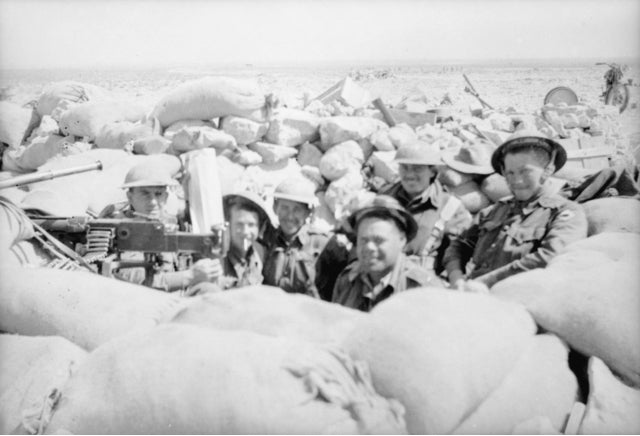
Tobruk mattered because a defended port behind the Axis advance forced Rommel to fight for his supply route instead of simply pushing east toward Egypt.
Australian, British, Indian and other Commonwealth troops held the Libyan port through much of 1941. The defenders turned existing Italian fortifications into a perimeter of strongpoints, patrol routes and anti-tank positions.
The port and the desert
Tobruk's harbour made it valuable for supply. Its defensive perimeter sat in open desert where movement could be observed at long range, but wadis and broken ground provided cover for patrols and raids.
The siege begins
After the rapid Axis advance in spring 1941, Tobruk was isolated. Australian 9th Division formed the core of the defence, supported by British armour, artillery and other Commonwealth units.
Explore this history
Continue from this Field Note into the closest Gallus campaign and military-history collection.
Patrol war
The defenders did not remain passively behind wire. Night patrols, raids and aggressive local counter-attacks disrupted Axis preparations and denied easy control of no-man's-land.
Anti-tank defence
Depth mattered. Forward posts slowed attackers while anti-tank guns and artillery engaged armour. The desert gave tanks room to manoeuvre, but unsupported armour remained vulnerable to well-sited guns.
Supply by sea
The Royal Navy and merchant vessels sustained the garrison through repeated runs into the port. The sea route also allowed units to rotate during the siege.
Relief
Operation Crusader in November–December 1941 eventually linked with Tobruk and forced Axis troops back. The siege demonstrated the operational value of holding a fortified port even when the surrounding desert had been lost.
Continue exploring
Sources and evidence used
- Australian War Memorial and British official histories of the Western Desert campaign.
- Royal Navy Mediterranean Fleet records.
Related Field Notes
FROM THIS CAMPAIGN
World War 2

CONTINUE THE STORY
More from this campaign
Read it, reference it or wear it — the related pieces are kept together here.
CAMPAIGN COLLECTION
World War 2
Stay with this subject instead of being dropped back into the full catalogue.
Explore the collection →FIELD NOTES
Get new Field Notes by email
New research, campaign guides and useful references without a daily sales barrage.
