


Operation Market Garden 1944: Eindhoven, Nijmegen, Arnhem & the Road to the Rhine — Complete Campaign Guide

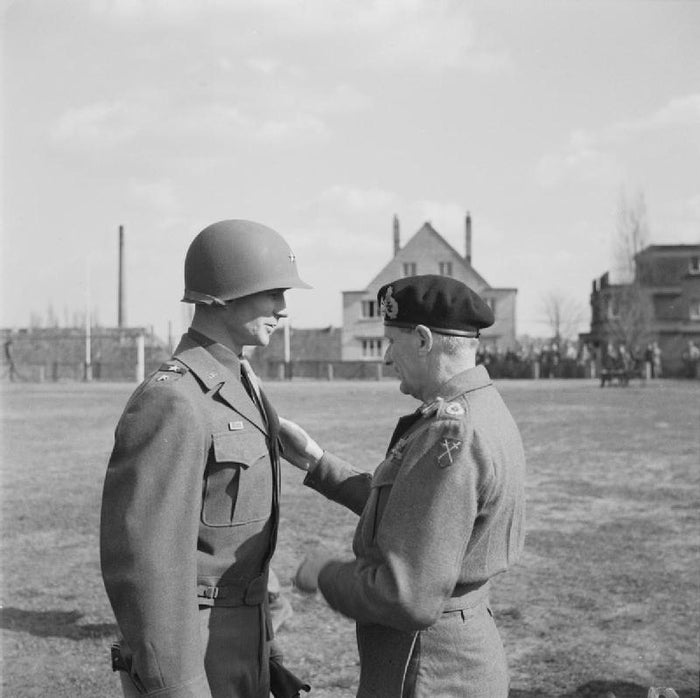
Market Garden was an attempt to leap across the Netherlands by combining airborne seizure of bridges with a single armoured thrust to the Lower Rhine.
The operation began on 17 September 1944. US airborne divisions landed around Eindhoven and Nijmegen, while British 1st Airborne Division and the Polish brigade were sent to Arnhem. XXX Corps was to drive north over the captured crossings.
Market and Garden
'Market' was the airborne operation; 'Garden' was the ground advance. The plan depended on bridges being held in sequence and XXX Corps maintaining tempo along a narrow road.
Eindhoven
101st Airborne secured key crossings, but demolitions and German resistance caused delays. Engineers and ground troops had to repair or replace bridges before armour could continue.
Nijmegen
82nd Airborne fought for the crossings around Nijmegen. The Waal River assault and later capture of the main road bridge opened the route north, but valuable time had passed.
Explore this history
Continue from this Field Note into the closest Gallus campaign and military-history collection.
Arnhem
1st Airborne Division landed several miles from the bridge. Only part of the force reached it. German armoured units and improvised battle groups contained the remainder around Oosterbeek. Gallus already has a dedicated Arnhem guide.
The single road
XXX Corps advanced along a raised highway bordered by soft ground and waterways. German counter-attacks repeatedly cut the route, creating traffic and supply delays.
Weather and communications
Cloud and fog disrupted air reinforcement and resupply. British airborne radio problems at Arnhem compounded the difficulty of coordinating dispersed units.
End of the operation
The surviving Arnhem force withdrew across the Rhine on 24–25 September. The Allies held substantial Dutch territory but had not crossed the Lower Rhine in strength.
Continue exploring
Sources and evidence used
- National Army Museum — Operation Market Garden.
- British, US and Polish official histories and unit records.
Related Field Notes
FROM THIS CAMPAIGN
World War 2


CONTINUE THE STORY
More from this campaign
Read it, reference it or wear it — the related pieces are kept together here.
FEATURED DESIGN

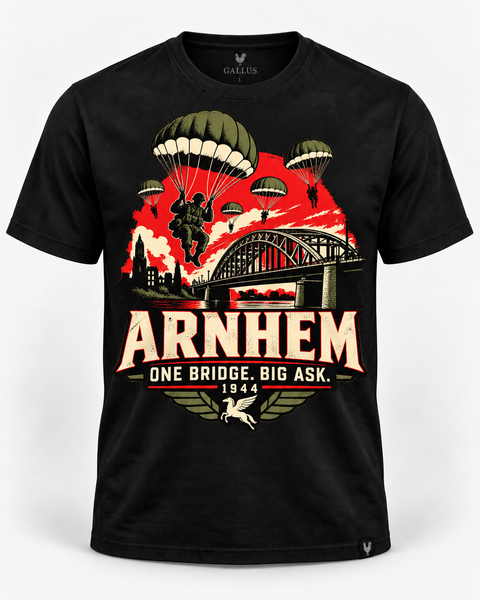
Operation Market Garden 1944 T-Shirt — WW2 Airborne Campaign
€30,95 EUR
View the design →CAMPAIGN COLLECTION
World War 2
Stay with this subject instead of being dropped back into the full catalogue.
Explore the collection →FIELD NOTES
Get new Field Notes by email
New research, campaign guides and useful references without a daily sales barrage.
