


Crossing the Rhine 1945: Operations Plunder & Varsity — Complete Field Guide

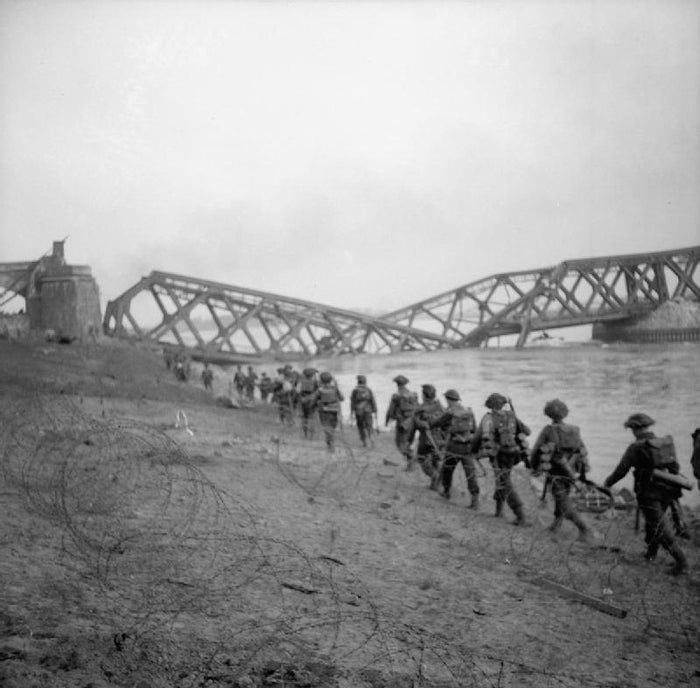
By March 1945 the Rhine was the last great natural barrier protecting western Germany. Operation Plunder forced the river; Operation Varsity dropped airborne troops beyond it.
Field Marshal Montgomery's 21st Army Group launched the main crossing on the night of 23–24 March 1945 near Rees, Wesel and Xanten.
Preparation
Artillery, engineers, assault boats, amphibious vehicles and bridging equipment were concentrated on the west bank. Smoke and bombardment helped conceal and support the crossing.
Operation Plunder
British Second Army and US Ninth Army crossed on a broad front. Assault infantry established bridgeheads while engineers worked to put heavier traffic over the river.
Explore this history
Continue from this Field Note into the closest Gallus campaign and military-history collection.
Operation Varsity
On 24 March, British 6th Airborne and US 17th Airborne Divisions landed east of the Rhine. Unlike Arnhem, the airborne operation was launched close to advancing ground forces and in one main lift.
Wesel
Wesel was heavily bombed and shelled before ground forces entered. The destruction illustrates the scale of firepower the Allies were willing to use to ensure the crossing succeeded.
Bridges and logistics
Capturing the far bank was only the first task. Engineers had to build bridges capable of carrying armour, artillery, fuel and the enormous logistics flow required for the final advance into Germany.
After the Rhine
Once the bridgeheads expanded, Allied armies moved rapidly into northern Germany and toward the Ruhr. The strategic barrier had been broken.
Continue exploring
Sources and evidence used
- British official history of the campaign in North-West Europe.
- 6th Airborne Division and Royal Engineers operational records.
Related Field Notes
FROM THIS CAMPAIGN
World War 2


CONTINUE THE STORY
More from this campaign
Read it, reference it or wear it — the related pieces are kept together here.
FEATURED DESIGN

Operation Varsity 1945 T-Shirt — WW2 Rhine Airborne Assault
€30,95 EUR
View the design →CAMPAIGN COLLECTION
World War 2
Stay with this subject instead of being dropped back into the full catalogue.
Explore the collection →FIELD NOTES
Get new Field Notes by email
New research, campaign guides and useful references without a daily sales barrage.
