


Siege of Sarajevo 1992–95: UNPROFOR, Aid, Snipers & the British Role — Complete Field Guide
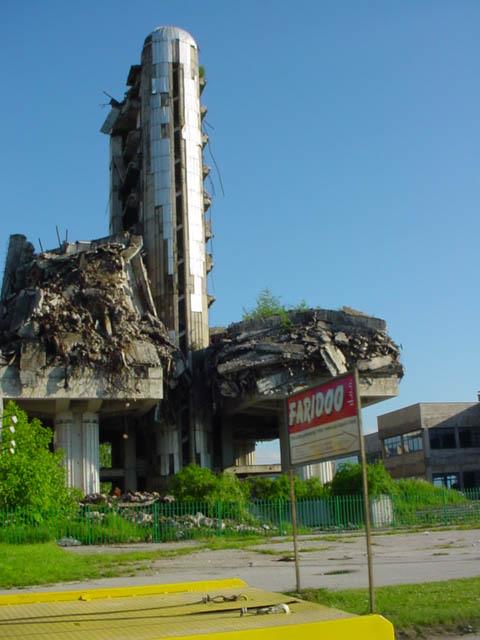
Sarajevo became the most visible symbol of the Bosnian War because a European capital was subjected to years of shelling, sniper fire, shortages and political deadlock while international forces tried to keep humanitarian lifelines open.
The siege began in 1992 and continued until 1995. Bosnian Serb forces held much of the high ground around the city, while the Bosnian government defended the urban area below. Civilians lived inside a battlefield shaped by artillery, mortars, snipers and the constant difficulty of movement.
This Field Note focuses on the military geography, humanitarian system and British connection. The wider deployment is covered in Bosnia 1992–95: Operation GRAPPLE & UNPROFOR.
The geography of a siege
Sarajevo sits in a valley surrounded by high ground. That geography gave forces occupying ridges and suburbs around the city strong observation and firing positions. Major roads and exposed intersections became dangerous because movement could be observed from above.
For civilians, ordinary acts—fetching water, crossing a street, queuing for food—could become life-threatening. For UN forces, convoy routes and the airport became strategic lifelines.
The airport and humanitarian access
Sarajevo airport was central to the international relief effort. UN arrangements allowed humanitarian flights to bring supplies into the city, while convoys attempted to move food and medicine overland.
Keeping those systems functioning required negotiation with armed parties, route security and constant adaptation. A ceasefire around one route could fail quickly.
Explore this history
Continue from this Field Note into the closest Gallus campaign and military-history collection.
Explore Campaigns & Operations →
British personnel in Sarajevo
British observers, liaison staff, medical personnel and later formed units served in Bosnia. Sarajevo was an important command, liaison and media centre for the mission. British personnel operated within the wider UNPROFOR structure rather than as an independent force controlling the city.
The distinction matters because the ability to act was governed by UN authority and coalition arrangements, not simply by what a British commander might have preferred tactically.
Snipers, shelling and the civilian battlefield
The term 'Sniper Alley' became associated with major routes through the city. Sniper fire was only one part of the danger. Artillery and mortars caused large numbers of casualties, while damaged infrastructure created shortages and medical emergencies.
Responsibility for specific attacks has been the subject of investigations and court findings. Where attribution is disputed, historical accounts should rely on forensic evidence and judicial findings rather than repeating wartime propaganda as fact.
UNPROFOR's limits
The UN mission could escort aid, observe ceasefires and help negotiate local arrangements. It was not initially designed or authorised to defeat the besieging forces. That gap between humanitarian ambition and coercive power became one of the defining problems of the mission.
Later NATO air operations and changes in the military balance altered the situation, but those developments belonged to a different phase of the war.
The road to 1995
By 1995, a combination of battlefield changes, Croatian and Bosnian government offensives, NATO air operations and international diplomacy shifted the strategic balance. The siege ended as the war moved toward the Dayton settlement.
Memory and responsibility
Sarajevo should not be reduced to a dramatic backdrop for foreign soldiers. The primary human story is the civilian population living under siege and the Bosnian forces defending the city. The international military role is important because it shaped aid, diplomacy and later intervention, but it sits inside that wider experience.
Continue exploring
Sources and evidence used
- National Army Museum — Bosnia.
- United Nations reports on Sarajevo, humanitarian access and UNPROFOR.
- International Criminal Tribunal for the former Yugoslavia judgments on shelling and sniper campaigns.
- British military and diplomatic records for UK participation in UNPROFOR.
