


RAF Operation GRANBY 1991: Tornado, Jaguar, Buccaneer & the Gulf Air War — Complete Field Guide
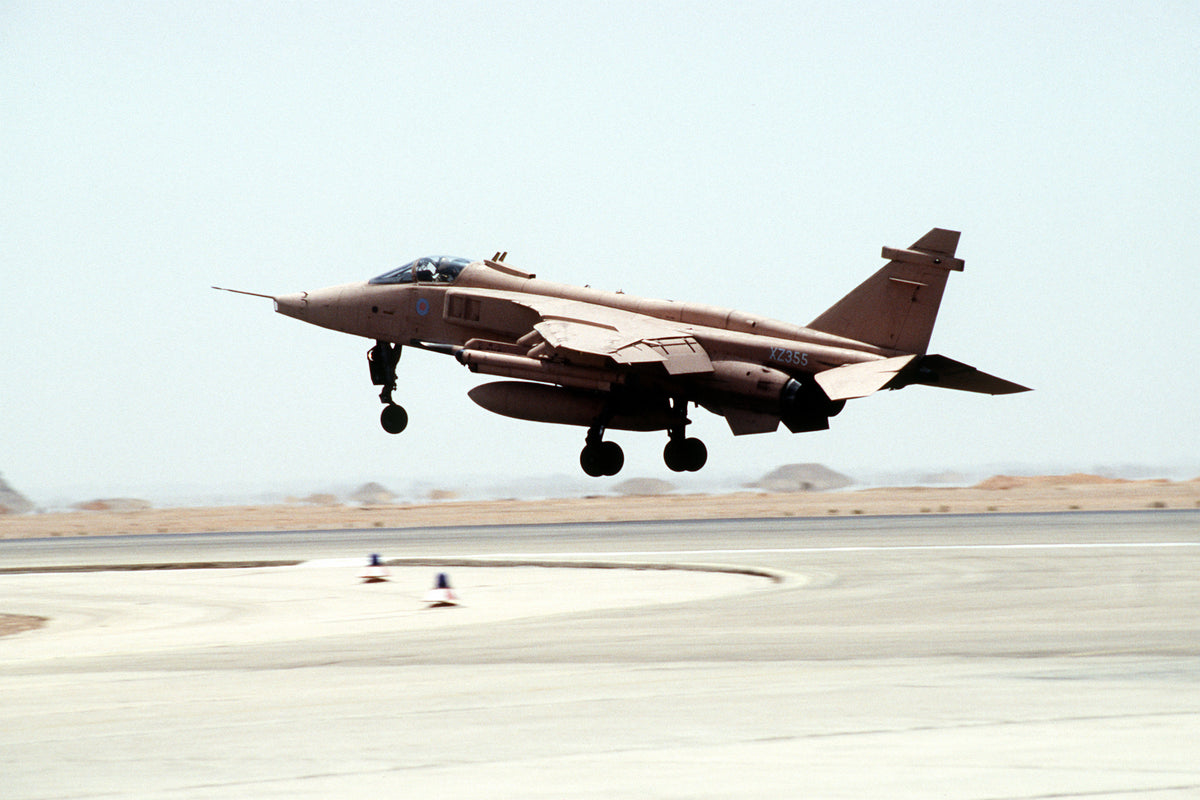
Operation GRANBY was the RAF's largest combat deployment since Suez and a turning point in how the service thought about expeditionary air power, precision weapons and deployed operations.
The coalition air campaign began on 17 January 1991 and continued for 43 days. The RAF deployed Tornado GR1 strike aircraft, Tornado F3 fighters, Jaguars, Buccaneers, tankers, Nimrods, transports, helicopters and RAF Regiment units.
From Cold War posture to expeditionary war
The RAF entered the crisis still structured heavily around NATO commitments in Europe. The Gulf demanded rapid deployment to unfamiliar bases, integration with a huge multinational air campaign and sustained operations in desert conditions.
The opening strikes
RAF Tornados attacked Iraqi airfields and other targets from the first night. Early low-level missions exposed crews to anti-aircraft fire and surface-to-air missiles. Losses forced a reassessment of tactics and target methods.
Precision evolves
Buccaneers deployed with Pave Spike laser designators, allowing laser-guided bombs to be used more effectively. The campaign accelerated the RAF's move toward precision strike and reinforced lessons about targeting, intelligence and electronic warfare.
Explore this history
Continue from this Field Note into the closest Gallus campaign and military-history collection.
Explore Campaigns & Operations →
Jaguar, Tornado F3 and support aircraft
Jaguar aircraft flew strike and reconnaissance missions. Tornado F3s contributed to air defence. Tankers extended endurance, while Nimrods supported maritime surveillance and Hercules aircraft sustained the deployment.
ALARM and air defence suppression
The RAF introduced the ALARM anti-radiation missile operationally during GRANBY. Suppressing Iraqi air defence required more than one weapon; it relied on coalition electronic warfare, intelligence, decoys and repeated attacks.
SCUD threat and base defence
Personnel at Gulf bases lived under the threat of Iraqi ballistic missiles and possible chemical attack. NBC drills, air raid shelters and Patriot deployments became part of daily life far behind the front line.
Sorties and scale
RAF sources record more than 6,000 sorties after hostilities began. The wider coalition flew vastly more. Scale matters because the ground offensive was preceded by weeks of attacks against Iraqi air forces, command networks, logistics and fielded formations.
Lessons
GRANBY accelerated the RAF's transition from a predominantly Cold War European posture to frequent overseas operations. Precision, deployability, coalition integration and air command-and-control became central themes of the decades that followed.
Continue exploring
Sources and evidence used
- Royal Air Force — Operation GRANBY anniversary history.
- RAF Air Historical Branch studies of Operation GRANBY.
- UK Ministry of Defence Gulf War records.
