


Operation PALLISER 2000: Sierra Leone, 1 PARA, Lungi & the British Intervention — Complete Field Guide
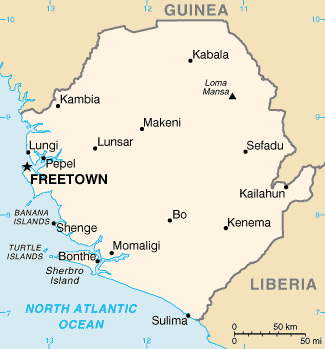
Operation PALLISER began as an evacuation mission and rapidly became a demonstration of how a relatively small, well-prepared force could change the military balance around a collapsing capital.
In May 2000, the Revolutionary United Front advanced toward Freetown during the Sierra Leone Civil War. Britain deployed forces to secure the evacuation of entitled persons and stabilise access through Lungi airport.
Why Britain intervened
The immediate trigger was the deteriorating security situation around Freetown and the threat to British and other foreign nationals. The wider context included the failure of earlier peace arrangements and the weakness of local security institutions.
Lungi airport
1 PARA formed the core of the spearhead battlegroup. British troops secured Lungi airport, while Chinook helicopters moved personnel across the wide estuary toward Freetown.
The airport was the operational hinge. Without it, reinforcement and evacuation would have been far harder.
Explore this history
Continue from this Field Note into the closest Gallus campaign and military-history collection.
Explore Campaigns & Operations →
From evacuation to stabilisation
As the British presence strengthened the security of the capital and key routes, the mission's effect went beyond evacuation. Training, advisory support and the visible presence of capable forces helped stabilise the government position.
Air mobility
Chinook helicopters were essential. They moved troops and evacuees quickly between Freetown and Lungi and gave commanders a freedom of movement that poor roads and insecurity would otherwise have denied them.
Rules, restraint and credibility
PALLISER is often cited as a successful intervention. Its circumstances were specific: limited initial objectives, strong tactical overmatch, a clear access point, host-government consent and a relatively small theatre around the capital.
Those factors make direct comparisons with larger interventions risky.
After PALLISER
Britain continued training and support to Sierra Leone's armed forces. Later operations, including the hostage rescue associated with Operation BARRAS, belonged to the wider British effort but should not be collapsed into the opening PALLISER deployment.
Continue exploring
Sources and evidence used
- UK Ministry of Defence doctrine and historical material on Operation PALLISER.
- UK government operational-deaths background describing the May 2000 intervention.
- UN records on Sierra Leone and the RUF crisis.
