


Major John Howard DSO: Pegasus Bridge, Operation Deadstick & the D-Day Coup de Main
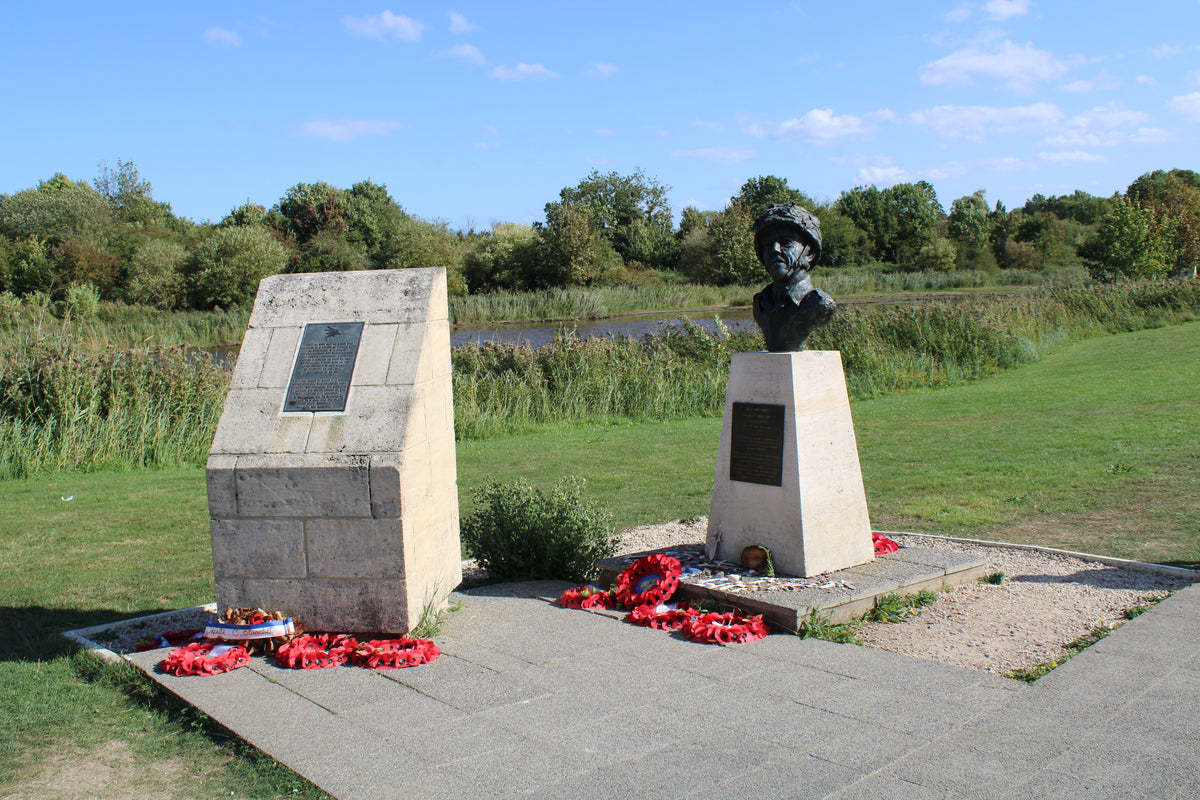
Major Reginald John Howard DSO commanded the glider-borne coup-de-main force that seized the bridges over the Caen Canal and River Orne in the opening minutes of D-Day. His name is inseparable from Pegasus Bridge, but the useful military story is not simply that his men landed close to the objective. It is how a company was trained so thoroughly that it could keep acting after a violent night landing shattered the neatness of the plan.

Before D-Day
Howard first enlisted in the King’s Shropshire Light Infantry in 1931. After leaving the Regular Army for civilian life and the reserve, he returned during the Second World War and received an emergency commission in 1940. By 1942 he commanded D Company, 2nd Battalion Oxfordshire and Buckinghamshire Light Infantry.
The unit became part of 6th Airborne Division and trained for airborne operations. When planners needed a force to seize the Bénouville bridge over the Caen Canal and the nearby Ranville bridge over the River Orne intact, Howard’s company provided the core of the coup-de-main party.
The task
The bridges were essential to the eastern flank of the Normandy invasion. British 6th Airborne Division would land east of the Orne while 3rd British Infantry Division came ashore at Sword Beach. If the crossings were destroyed or recaptured, the airborne troops could be isolated. If the bridges remained in British hands, the beach and airborne forces could link.
Howard’s force consisted of six reinforced infantry platoons, Royal Engineers and Glider Pilot Regiment crews carried in six Horsa gliders. ParaData records a total coup-de-main force of about 181 airborne troops.
Rehearsal as a weapon
The operation depended on precision. Glider pilots practised repeatedly and D Company rehearsed bridge assaults until men knew not merely their own tasks but the structure of the whole mission.
Glider pilot Jim Wallwork later recalled that the Deadstick profile was practised dozens of times before the real flight. That degree of repetition matters. A night landing can scatter equipment, injure men and destroy the visual order of a briefing-room model. Rehearsal gives people something to fall back on when the first seconds no longer resemble the plan.
Night of 5–6 June
The six gliders were towed from England late on 5 June and released over Normandy shortly after midnight. Three were assigned to the canal bridge and three to the river bridge.
The leading gliders landed extraordinarily close to the Caen Canal bridge at around 00:16. The aircraft hit the ground hard, but Howard’s assault groups got out and moved immediately. The defenders were overcome and Royal Engineers checked the bridge for demolition arrangements.
At the River Orne crossing, the assault also succeeded despite one glider landing farther from its intended zone. In roughly the first ten to fifteen minutes of the ground action, both crossings were in British hands.
Command after the assault
The operation did not end when the bridge was taken. Howard now had to hold two objectives while German forces reacted and while the main airborne drop assembled around him.
Elements of 7th Parachute Battalion moved into the Bénouville area and created a wider defensive screen. Later on D-Day, commandos advancing from Sword Beach under Brigadier Lord Lovat reached the crossings and physically linked the seaborne and airborne forces.
This is the part of Howard’s command that interests me most. A coup de main is designed around speed, but after the first few minutes the commander has to change mindset: ammunition, communications, fields of fire, counter-attack routes and relief timings now matter more than the elegance of the initial assault.
After Normandy
Howard received the Distinguished Service Order for his part in the operation. Later in 1944 he suffered serious injuries in a road accident and did not return to operational command before the war ended. He left the Army after the war.
He spent much of his later life helping preserve the story of the bridge operation and returned regularly to Normandy. The original Bénouville bridge was eventually replaced and preserved at the Mémorial Pegasus.
Why Howard matters
Howard’s reputation is sometimes presented as the story of a bold officer and a lucky landing. Luck mattered—as it always does—but that interpretation understates the preparation. The force had a sharply defined mission, practised it repeatedly, understood the ground and knew what had to happen after touchdown.
The lesson is not that every operation can be rehearsed forty times. It is that clarity before contact creates options after contact.
Continue the Normandy series
- Log 034 — Pegasus Bridge Complete Field Guide
- Log 033 — D-Day: Five Beaches
- Second World War Field Notes archive
