


Kosovo 1989–1999: The Political Road to Intervention — Autonomy, Repression, KLA, Rambouillet & NATO
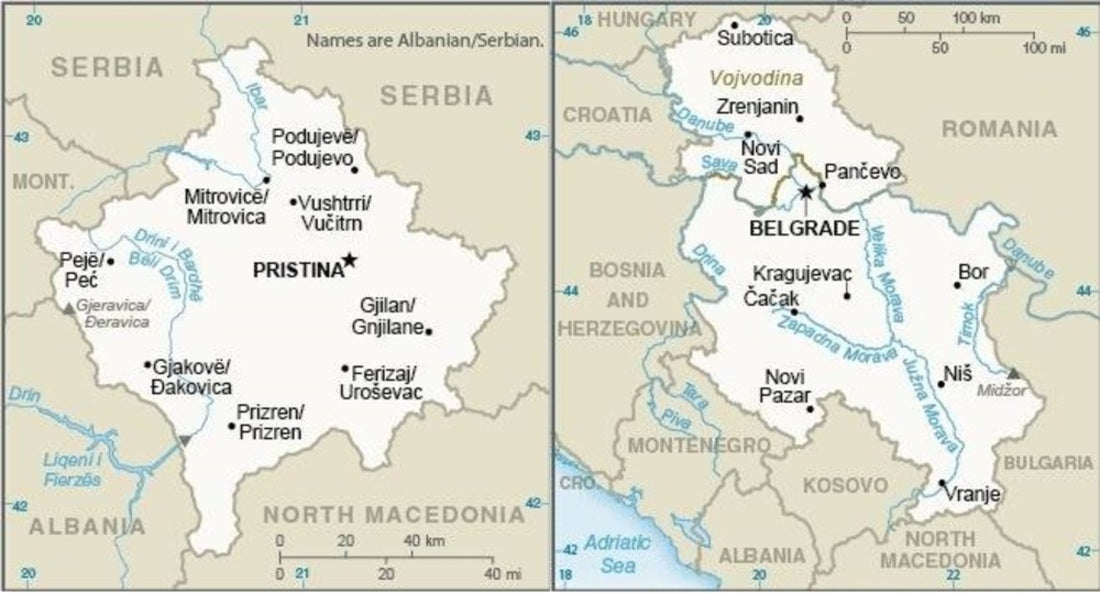
The Kosovo intervention of 1999 followed a decade of political confrontation, repression, armed insurgency, failed diplomacy and growing international concern over civilian displacement.
This Field Note separates that political road from the military campaign itself. The British ground deployment is covered in the existing Kosovo 1999 British Army & KFOR guide.
Autonomy and its removal
Kosovo was an autonomous province within socialist Yugoslavia, with a majority ethnic Albanian population and strong historical importance to Serbs. In 1989–90, the Serbian leadership under Slobodan Milošević sharply reduced Kosovo's autonomy and increased direct control from Belgrade.
Many Kosovo Albanians responded by building parallel political, educational and social structures. Ibrahim Rugova became associated with a strategy of non-violent resistance.
The rise of the KLA
By the mid-1990s, the Kosovo Liberation Army, or KLA, was carrying out armed attacks against Serbian police and state targets. Serbian security forces responded with counter-insurgency operations that also affected civilians. Violence escalated through 1998.
International reporting documented displacement, village destruction and abuses. The conflict was not simply one-sided in the sense that only one armed actor used violence, but the scale and capacity of Serbian state forces gave them a different level of coercive power.
Explore this history
Continue from this Field Note into the closest Gallus campaign and military-history collection.
Explore Campaigns & Operations →
International pressure
The UN Security Council imposed measures and called for a political settlement. NATO increased pressure and planning. The 1998 Holbrooke-Milošević agreement produced a temporary reduction in fighting and the deployment of OSCE verifiers, but the ceasefire did not hold.
Rambouillet
Talks at Rambouillet in early 1999 attempted to reach an interim political settlement and establish an international security presence. The Kosovo Albanian delegation eventually accepted the proposed framework; the Yugoslav/Serbian side did not accept the full terms, particularly provisions concerning NATO forces.
Accounts of Rambouillet are politically contested, so the safest approach is to distinguish the text of the proposals from later arguments about whether diplomacy had been exhausted.
From failed talks to air war
NATO began Operation Allied Force on 24 March 1999 without explicit authorisation in a new UN Security Council resolution. Supporters argued that military action was necessary to avert a humanitarian catastrophe; critics challenged the legality and consequences of intervention without Security Council approval.
Those legal and political debates remain important. They should be presented as debates rather than settled slogans.
Refugees and escalation
During the air campaign, the displacement of Kosovo Albanians increased dramatically. Serbian and Yugoslav forces carried out expulsions and attacks, while the KLA continued operations. Hundreds of thousands of people crossed into Albania and Macedonia.
British troops assembling with KFOR in Macedonia also supported humanitarian efforts as the refugee crisis expanded.
June 1999
Under combined military and diplomatic pressure, Milošević accepted terms for the withdrawal of Yugoslav and Serbian forces and the entry of an international security force. UN Security Council Resolution 1244 provided the framework for the post-conflict international presence.
Continue exploring
Sources and evidence used
- National Army Museum — Kosovo.
- OSCE reports on Kosovo in 1998–99.
- UN Security Council resolutions including 1160, 1199 and 1244.
- NATO documentation on Operation Allied Force and KFOR.
