


KFOR Enters Kosovo 12–13 June 1999: Kačanik Gorge, Pristina & the Airport Standoff — Complete Field Guide
The first days of KFOR's entry into Kosovo combined a planned NATO ground movement with an unexpected strategic problem: Russian troops reached Pristina airport before the main NATO force.
British troops entered Kosovo on 12 June 1999 under Lieutenant General Sir Mike Jackson. The mission was to establish security after the withdrawal agreement, protect movement routes and begin implementing the international settlement.
The wider British deployment is covered in Kosovo 1999: British Army, KFOR & Operation AGRICOLA.
Through the Kačanik Gorge
The route from Macedonia into Kosovo runs through restrictive terrain. British airborne and Gurkha troops helped secure the Kačanik Gorge so heavier units could move north. The King's Royal Hussars and armoured infantry then advanced toward Pristina.
The road movement was not simply ceremonial entry. Mines, unexploded ordnance, uncertain Serbian withdrawal and refugee movement all created risk.
Pristina
British forces entered Pristina in strength on 13 June. The city was in transition: Serbian forces were withdrawing, Kosovo Albanian refugees were returning and there was a danger of reprisals and disorder.
KFOR had to establish a visible security presence quickly while maintaining communications with withdrawing Yugoslav forces and local actors.
Explore this history
Continue from this Field Note into the closest Gallus campaign and military-history collection.
Explore Campaigns & Operations →
The Russian move to the airport
A Russian contingent moved from Bosnia and reached Pristina airport ahead of the principal NATO column. The move had not been coordinated with the NATO command and created a tense confrontation over control of the airfield.
British troops, including Irish Guards elements, were directed toward the airport. Senior NATO commanders debated how aggressively to respond. Lieutenant General Mike Jackson resisted steps he believed could produce a direct armed confrontation with Russian forces.
The episode has since generated dramatic quotations and simplified versions. The essential fact is less theatrical: NATO and Russian commanders had to manage an unexpected deployment by another nuclear-armed state's troops without turning a peace-implementation mission into a confrontation between allies and Russia.
Why the airport mattered
Pristina airport offered strategic access for reinforcement and supply. Control therefore had practical military value. The standoff was resolved through negotiation and wider arrangements rather than combat.
Security after entry
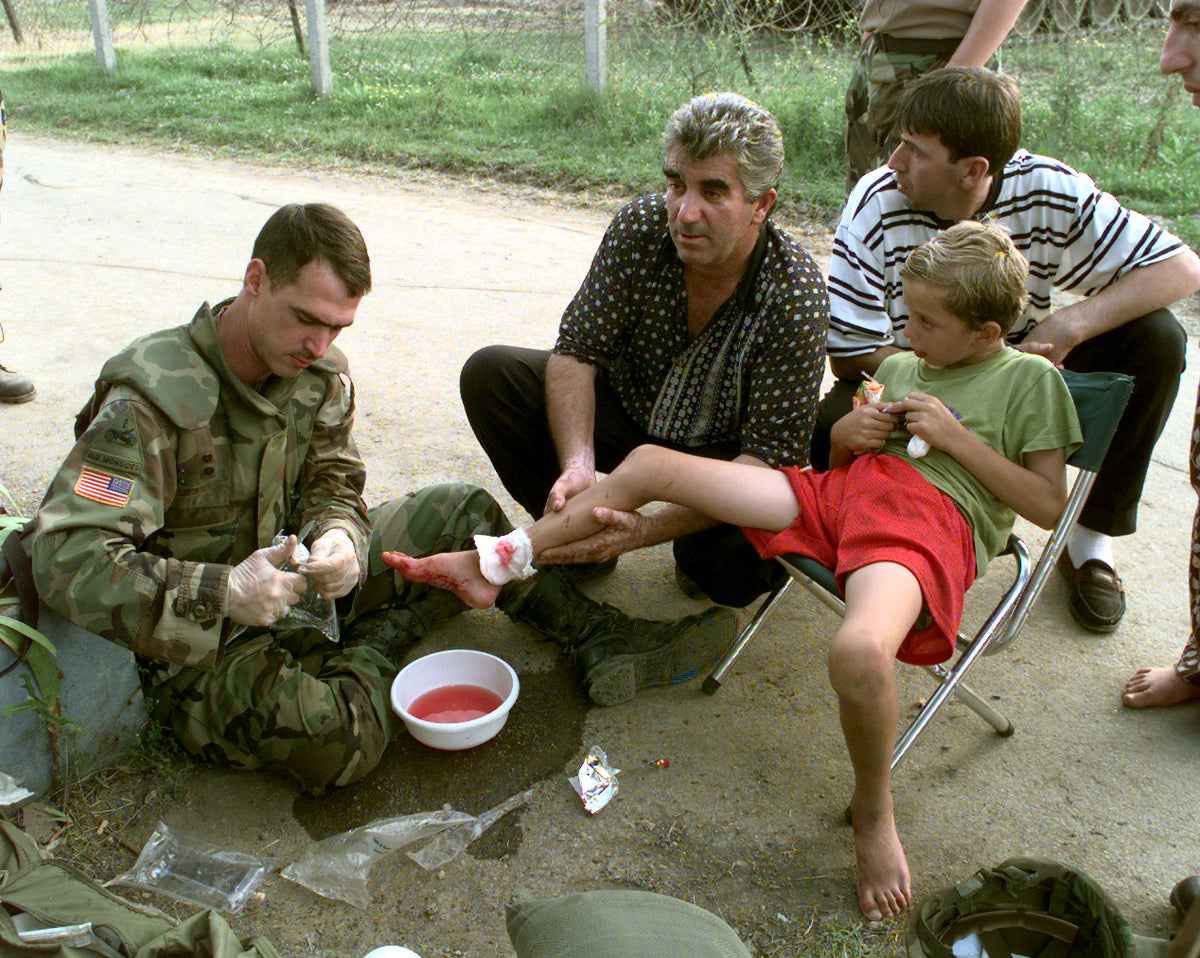
The end of the air campaign did not mean the end of violence. KFOR faced looting, reprisals, ethnic intimidation, mines and displaced populations. Protecting both Kosovo Albanians and remaining Serb civilians became part of the force's responsibility.
Myths and evidence
“NATO nearly fought Russia at Pristina airport.”
There was a real and dangerous command dispute, but both sides ultimately managed it without combat.
“KFOR entered an empty battlefield.”
No. The province was full of armed actors, refugees, damaged infrastructure and unexploded ordnance.
“The airport was the whole British entry.”
No. Securing the gorge, Pristina and wider routes mattered just as much.
Continue exploring
Sources and evidence used
- National Army Museum — Kosovo, including the British entry and airport episode.
- NATO KFOR records and June 1999 operational reporting.
- British military memoirs and official records, checked against NATO documentation where accounts differ.
