


Lieutenant-Colonel John McCrae: In Flanders Fields, Ypres & the Remembrance Poppy

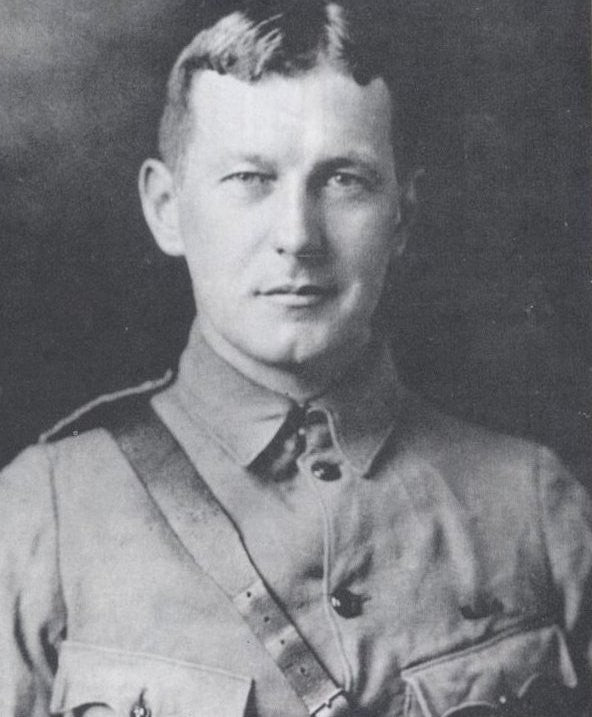
Lieutenant-Colonel John McCrae was a Canadian physician, artillery officer and poet whose 1915 poem In Flanders Fields became one of the most influential pieces of First World War remembrance. The familiar poppy symbol did not begin as a government campaign. Its modern meaning grew partly from a serving doctor's response to death during the Second Battle of Ypres.

Doctor, gunner and soldier
McCrae was born in Guelph, Ontario, in 1872 and trained as a doctor at the University of Toronto. He also served in the artillery and saw service during the South African War. When the First World War began he joined the Canadian Expeditionary Force and became medical officer to the 1st Brigade, Canadian Field Artillery.
Second Ypres, 1915
In April and May 1915 Canadian troops fought around Ypres during a battle remembered for the first large-scale German use of chlorine gas on the Western Front. McCrae treated wounded men under exhausting conditions close to the fighting.
On 2 May his friend Lieutenant Alexis Helmer was killed. McCrae helped bury him in a makeshift grave. Veterans Affairs Canada records that the sight of poppies among the disturbed ground and graves helped inspire McCrae to write In Flanders Fields the following day.
The poem
The poem was published in Punch in December 1915 and quickly became widely known. Its imagery connected the natural red poppy with battlefield graves and the voices of the dead. The poem also contains the language of continuing the struggle, so it should not be reduced to a purely pacifist text or to a decorative image detached from wartime context.
After Ypres
McCrae was later placed in charge of medicine at No. 3 Canadian General Hospital. He died of pneumonia and meningitis in January 1918 while still on active service and was buried at Wimereux Communal Cemetery in France.
From poem to symbol
McCrae did not create the later Poppy Appeal. That happened after his death through campaigners including Moina Michael and Anna Guérin and through veterans' organisations. His poem provided the image that made the flower emotionally legible across several Allied countries.
I served as a mortarman with The Royal Welsh, including in Afghanistan. That does not make a modern mortar detachment equivalent to Canadian artillery or a 1915 dressing station. What it does give me is a strong sense of how close fire support, casualties and the ground can sit to one another. McCrae's story is powerful because the symbol grew out of that physical landscape rather than being invented later in an office.
