


Fallujah 2004: The Two Battles, Operation Phantom Fury & the British Role // Log 051
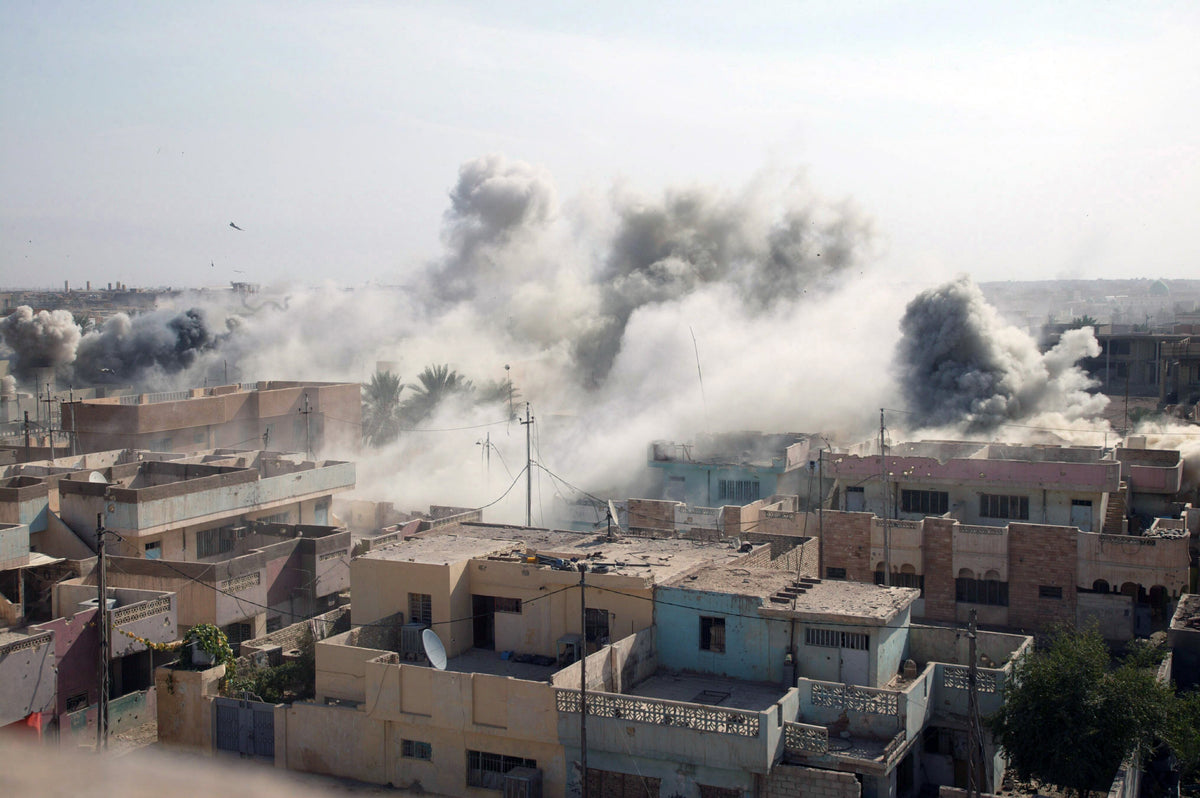
There was not one Battle of Fallujah in 2004 but two. The first, Operation Vigilant Resolve in April, began after the killing and mutilation of four American security contractors and ended with US Marines withdrawing under political pressure. The second, Operation al-Fajr / Phantom Fury in November, was a much larger and more deliberately prepared US- and Iraqi-led assault that cleared the city in some of the hardest urban fighting of the Iraq War.
British forces did not lead either assault and the Black Watch did not storm Fallujah. Their role was indirect but real: an armoured British battlegroup moved from the UK area in southern Iraq to North Babil, relieving US forces for operations connected with the wider Fallujah campaign. I think that distinction matters because the British role is often exaggerated online.
I served for 12 years with The Royal Welsh as a mortarman. I was not at Fallujah. What I can bring to this is the way I read an infantry battle in a city: observation, restricted arcs, fortified buildings, ammunition, casualties, supporting fires and the basic problem that you can be only a few streets away from another group and still have a very poor picture of what they are dealing with.

At a glance
- City: Fallujah, Al Anbar Province, on the Euphrates west of Baghdad.
- First battle: Operation Vigilant Resolve, April 2004.
- Second battle: Operation al-Fajr (“The Dawn”), commonly known as Operation Phantom Fury, November–December 2004.
- Main coalition force: US Marine Corps, with US Army and Iraqi forces in the second battle.
- British connection: 1st Battalion The Black Watch battlegroup deployed to North Babil to relieve US forces for other tasks during the Fallujah campaign.
- British troops assaulting Fallujah city: none as a formed British assault battlegroup.
Why Fallujah mattered
Fallujah lies roughly 50 kilometres west of Baghdad on the Euphrates. In 2004 it became one of the most important centres of the Sunni insurgency. Its location connected routes toward Ramadi, Baghdad and the western approaches, while its dense urban fabric offered armed groups concealment, storage, command sites and defensive positions.
Politically, Fallujah became a symbol. For insurgents it represented resistance to occupation. For the coalition it became evidence that allowing a major city to remain beyond effective government control threatened the wider transition and the planned January 2005 elections.
31 March 2004: the killings that changed the city
On 31 March four American private security contractors working for Blackwater were ambushed and killed in Fallujah. Their bodies were burned and mutilated and two were displayed from a bridge. Images were broadcast worldwide.
Marine commanders were already taking over responsibility for Al Anbar and initially argued against an immediate retaliatory assault. The US Marine Corps’ later history records Brigadier General John Kelly warning against striking out simply in retribution. Political pressure nevertheless produced an order to move against the city.
First Battle — Operation Vigilant Resolve
Operation Vigilant Resolve began on 4 April 2004. By the following morning Marines had surrounded the city. The principal assault elements included 1st Battalion, 5th Marines and 2nd Battalion, 1st Marines, with tanks, engineers, aviation and other support.
The Marines gained ground through several days of intense urban fighting. Official Marine Corps accounts compare the intensity with Hue City in Vietnam. But battlefield progress was accompanied by a rapidly growing political crisis over civilian casualties, media reporting and pressure from the Iraqi Governing Council.
A ceasefire began on 9 April. Fighting and violations continued, but the planned full clearance did not. On 1 May the Marines transferred responsibility to the newly created Fallujah Brigade and withdrew from the city.
Why the first battle did not settle Fallujah
The Fallujah Brigade was intended to provide an Iraqi solution that could restore local control without a destructive coalition assault. Instead insurgent organisations strengthened their position over the following months. Weapons, fighters and defensive preparations accumulated.
That is one of the campaign lessons I take from Fallujah: stopping an assault can solve an immediate political problem while creating a later military one if whatever replaces the attacking force cannot establish durable control.
Autumn 2004: the decision to return
By September and October coalition commanders regarded Fallujah as a major insurgent sanctuary. The Iraqi Interim Government also faced the problem of holding national elections while a large city remained outside effective state control.
The second operation was therefore planned differently. It would isolate the city, attack deliberately from the north, use major US Marine and Army forces with Iraqi participation, and continue until organised resistance had been broken.
Order of battle — Second Fallujah, simplified
Coalition assault force
- I Marine Expeditionary Force / 1st Marine Division — principal US command for the battle.
- Regimental Combat Team 1 — including 3rd Battalion, 1st Marines, forming a major part of the western attack.
- Regimental Combat Team 7 and other Marine infantry battalions — eastern and supporting attack sectors.
- US Army armoured and mechanised elements — including heavy direct-fire and protected-mobility support integrated into the urban advance.
- Iraqi security-force units — participated in the assault and in the intended restoration of Iraqi government control.
- Marine aviation, artillery, engineers and logistics — essential to isolation, breaching, fire support, casualty evacuation and sustainment.
Exact attachments changed during the operation. I am keeping the order of battle at a useful level because the point is the combined nature of the force: infantry cleared the city, but armour, engineers, aviation, artillery, intelligence and logistics made that clearance possible.
7–8 November: the assault begins
Operation al-Fajr opened with shaping operations on 7 November 2004. Forces seized key sites including the hospital and bridges on the Fallujah peninsula to restrict movement and secure the western flank.
The main assault then drove into the city from the north. Rather than advancing from the obvious eastern approaches, coalition forces attacked through prepared breach lanes and pushed south through successive districts.
Within days Marine and Army units had reached Highway 10 through the centre of Fallujah. The battle did not end there. Organised resistance broke into smaller groups and strongpoints, forcing repeated house-to-house clearance.
The urban fight
Fallujah became a battle of rooms, rooftops, stairwells, alleys and compounds. Buildings were fortified, doors and windows booby-trapped, firing positions prepared and movement routes cut through walls. A street apparently cleared at one moment could still contain fighters in adjoining buildings or internal routes.
From my own mortarman’s perspective, urban ground changes everything. Supporting fires remain powerful, but the geometry is unforgiving. Friendly troops may be very close to the target, buildings mask observation and civilians or wounded people may still be in the battlespace. The infantry ends up carrying much of the final burden of discrimination and clearance.
Casualties and destruction
The second battle produced heavy casualties among US forces and insurgents and extensive damage across Fallujah. Civilian casualty numbers remain disputed because many residents had left before the assault while others remained, and different organisations used different methods and definitions.
I do not think it helps to pick one contested civilian total and present it as universally agreed. What is not disputed is that the fighting and the evacuations before it transformed the city and imposed a major cost on the people who lived there.
The British role — what actually happened
In October 2004 the UK Government agreed to a US request for a British armoured battlegroup to operate outside the normal British area in southern Iraq. The force was built around 1st Battalion The Black Watch with supporting reconnaissance, engineers, signallers, medics and other combat-support and service-support elements—around 850 personnel.
The battlegroup deployed to North Babil on 27 October. Its purpose was to relieve US forces so those troops could be used elsewhere as coalition operations intensified around Fallujah and other insurgent centres.
On 4 November, Sergeant Stuart Gray, Private Paul Lowe and Private Scott McArdle were killed with an Iraqi interpreter in a suicide vehicle-bomb attack on a Black Watch checkpoint. On 8 November, Private Pita Tukutukuwaqa was killed when the Warrior he was driving was struck by a roadside IED north of Camp Dogwood.
Those deaths belong to the British cost of the wider operation even though the men were not killed in the Fallujah city assault.
Why Britain agreed
The Government’s argument was that the British southern area could not be treated in isolation from the rest of Iraq. Instability around Baghdad and Fallujah affected the whole coalition campaign and the political process leading toward elections.
The Iraq Inquiry later examined the decision and the degree to which supporting the Fallujah operation preserved British influence over coalition planning. The deployment was politically controversial in the UK because it moved British troops into a more dangerous central-Iraq environment close to a major US offensive.
End of the battle
By mid-November coalition forces had broken organised control of the city, although fighting against isolated groups continued for weeks. US Marine Corps accounts mark continued operations into December.
The capture of Fallujah removed a major insurgent sanctuary before the January 2005 elections, but it did not end the Sunni insurgency. Fighters, networks and ideas survived elsewhere, and violence across Iraq continued.
What the two battles tell me
I see the two Fallujah battles almost as a controlled comparison in military and political decision-making.
In April, Marines made substantial tactical progress but the offensive was halted because the political cost of continuing was judged too high. The replacement security arrangement failed, and insurgents strengthened the city. In November, coalition and Iraqi leaders accepted the political and physical cost of a much larger assault to ensure the city was cleared.
Neither episode proves that military force can solve the wider politics of an insurgency. To me, they show the opposite problem: tactical success, local political legitimacy and strategic timing cannot really be separated.
Chronology
- 31 March 2004: four US security contractors are killed and mutilated in Fallujah.
- 4 April: Operation Vigilant Resolve begins.
- 5–9 April: Marines isolate the city and fight into several districts.
- 9 April: ceasefire begins amid political pressure.
- 1 May: US Marines hand responsibility to the Fallujah Brigade and withdraw.
- Summer–autumn: insurgent control and defensive preparation increase.
- 21 October: UK announces the Black Watch battlegroup deployment.
- 27 October: Black Watch moves into North Babil.
- 7 November: Operation al-Fajr / Phantom Fury begins with shaping attacks.
- 8 November onward: main coalition assault drives south through Fallujah.
- Mid-November: organised resistance largely broken; clearance continues.
- December: sporadic fighting and clearing operations continue.
Wear the history
I have kept the product link after the British-role and casualty distinctions so the history does not get interrupted by merchandising.
Sources and further reading
- US Marine Corps — Operation Vigilant Resolve
- 1st Marine Regiment — official Fallujah history
- 1st Marine Division — Second Battle of Fallujah / Operation al-Fajr
- UK Parliament — announcement of the Black Watch deployment
- UK Parliament — composition of the Black Watch battlegroup
- MOD — Sergeant Stuart Gray, Private Paul Lowe and Private Scott McArdle
- MOD — Private Pita Tukutukuwaqa
- Iraq Inquiry — decision-making around the Black Watch deployment
- Wikimedia Commons / US DoD — public-domain Fallujah image
I treat Vigilant Resolve and al-Fajr as separate battles and state the British role precisely. The Black Watch supported the wider Fallujah operation from North Babil; I do not rewrite that as a British assault on the city.
