


Falaise Pocket 1944: Encirclement, Chambois & the End of the Normandy Campaign — Complete Field Guide
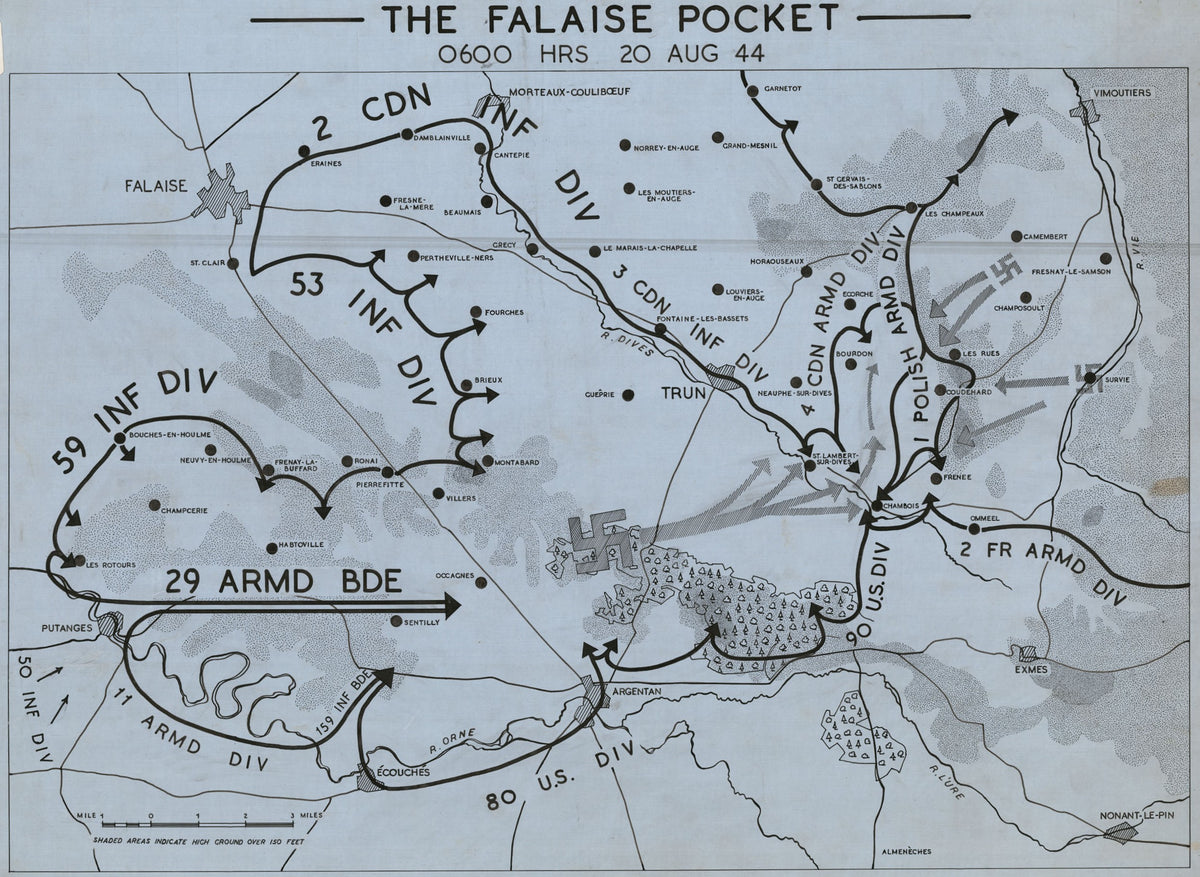
The Falaise Pocket was the point where the Normandy campaign turned from a slow battle of hedgerows and fortified villages into the destruction and retreat of much of the German army in France.
After the American breakout from Normandy and failed German counter-attack at Mortain, Allied armies converged around Falaise, Argentan, Trun and Chambois in August 1944.
Closing the pocket
Canadian and Polish forces advanced from the north while American forces approached from the south. British forces pressed from the west and helped maintain pressure across the shrinking German position.
Chambois and Mont Ormel
Polish 1st Armoured Division fought around Mont Ormel while US and Polish troops linked near Chambois. German formations repeatedly tried to force routes out through the narrowing gap.
Explore this history
Continue from this Field Note into the closest Gallus campaign and military-history collection.
Explore D-Day & Normandy 1944 →
The corridor of escape
The pocket never sealed instantly. Tens of thousands of German troops escaped east, often abandoning heavy weapons and vehicles. Others were killed or captured under intense artillery and air attack.
The battlefield
Roads became packed with wrecked transport, dead horses and destroyed armour. Contemporary accounts describe the severe physical aftermath around the escape routes.
Numbers and caution
Loss estimates vary by source and by the geographical limits used for the pocket. The National Army Museum summarises roughly 60,000 German troops killed or captured in the Falaise fighting, while many more escaped without most of their heavy equipment.
After Falaise
The German retreat accelerated toward the Seine and Paris. Normandy was effectively won, but the rapid Allied advance created new supply problems that would shape operations in September.
Continue exploring
Sources and evidence used
- National Army Museum — Battle of Normandy.
- Canadian, Polish, British and US official histories.
Related Field Notes
FROM THIS CAMPAIGN
D-Day & Normandy 1944
CONTINUE THE STORY
More from this campaign
Read it, reference it or wear it — the related pieces are kept together here.
FEATURED DESIGN
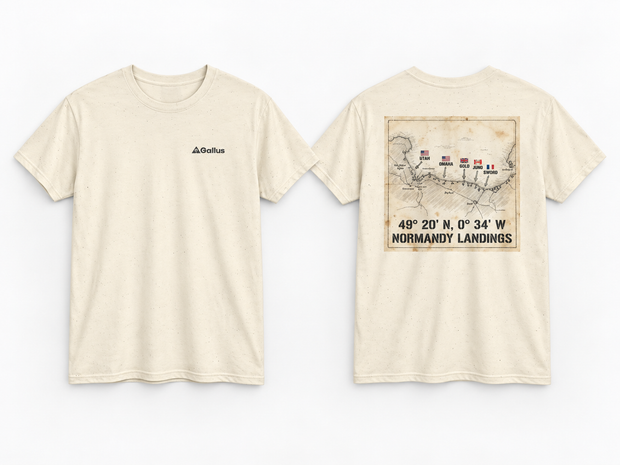
Normandy Landings Map T-Shirt — D-Day 1944
€30,95 EUR
View the design →CAMPAIGN COLLECTION
D-Day & Normandy 1944
Stay with this subject instead of being dropped back into the full catalogue.
Explore the collection →FIELD NOTES
Get new Field Notes by email
New research, campaign guides and useful references without a daily sales barrage.
