


Central Bosnia 1993: Vitez, Convoys, UNPROFOR & the British Army — Complete Field Guide
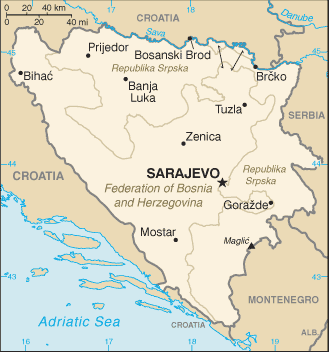
Central Bosnia was where the limitations of peacekeeping without a peace became impossible to ignore.
British troops deployed into Bosnia under Operation GRAPPLE as part of the United Nations Protection Force, UNPROFOR. Their immediate tasks centred on protecting aid convoys, maintaining routes, gathering information and reducing the risk to civilians and humanitarian agencies. In central Bosnia, especially around Vitez and the Lašva Valley, those tasks placed soldiers between forces that were still fighting a war.
This Field Note narrows the lens from the existing Bosnia 1992–95 campaign guide to the practical ground-level problem of central Bosnia in 1993.
The war around the aid routes
Bosnia's war followed the break-up of Yugoslavia and involved Bosnian Serb, Bosnian Croat and Bosnian government forces, with shifting alliances and major violence against civilians. By 1993 the conflict between Croat and Bosniak forces had intensified in central Bosnia, making the humanitarian routes around Vitez and the Lašva Valley particularly dangerous.
UNPROFOR's mandate did not amount to conventional war-fighting authority. British troops therefore had to operate among armed groups, checkpoints and shelling while remaining within rules designed for a UN mission.
Operation GRAPPLE and the British battlegroup
Britain's main initial UNPROFOR contribution deployed under Operation GRAPPLE in November 1992. It included a battlegroup based around 1st Battalion The Cheshire Regiment and reconnaissance elements of 9th/12th Royal Lancers. Later rotations brought other British units.
Warrior infantry fighting vehicles became one of the visible symbols of the deployment. Their armour and mobility mattered on roads threatened by small-arms fire, mines and shelling, but they did not make convoys invulnerable.
Explore this history
Continue from this Field Note into the closest Gallus campaign and military-history collection.
Explore Campaigns & Operations →
Vitez and the Lašva Valley
Vitez sat in a contested area between Croat and Bosniak communities. British patrols encountered burned villages, displaced civilians, roadblocks and armed groups who could be cooperative at one checkpoint and obstructive at the next.
The soldier's problem was often less about seizing ground than understanding who controlled the next few kilometres, whether a route had been mined, and whether a convoy could move without becoming trapped between opposing forces.
Convoy protection
Humanitarian convoys carried food, medicine and other essentials. Keeping them moving required route reconnaissance, liaison with local commanders, mine awareness, vehicle recovery and disciplined responses to provocation.
A convoy stopped by a roadblock could not simply force its way through without considering the mandate, the risk to civilians and the possibility of escalation. That made negotiation and tactical patience military skills in their own right.
Intelligence without a conventional front
There was no neat front line. British patrols had to build a picture from observation, local liaison, refugee movement, checkpoint behaviour and reports from other UN contingents. A village that appeared quiet could sit beside a contested route or newly laid minefield.
That uncertainty shaped the deployment. Map reading, radio discipline, vehicle positioning and an understanding of local armed groups mattered as much as conventional fieldcraft.
Rules of engagement and frustration
UNPROFOR was criticised for being unable to stop many atrocities. That criticism has to be separated from the legal and political limits imposed on soldiers. Troops on the ground did not have an unlimited mandate to defeat the factions. Their mission was shaped by Security Council resolutions and national rules of engagement.
This created a recurring tension: soldiers could witness the consequences of violence while lacking authority to intervene in the way an offensive combat force might.
Civilians and evidence
Central Bosnia saw serious crimes against civilians committed by different armed actors. Historical writing should name documented atrocities accurately, distinguish allegation from established findings and avoid turning whole ethnic groups into combatants. International criminal court judgments and contemporary UN reporting are essential sources for contested incidents.
What British soldiers learned
The Bosnia deployment reinforced lessons in protected mobility, mine awareness, negotiation, medical support and operating under intense media and political scrutiny. It also showed that peacekeeping doctrine becomes fragile when there is no accepted peace settlement beneath it.
Continue exploring
Sources and evidence used
- National Army Museum — Bosnia, for UNPROFOR, Operation GRAPPLE and the British deployment.
- United Nations Security Council and UNPROFOR records for the mandate and humanitarian mission.
- International Criminal Tribunal for the former Yugoslavia judgments for documented crimes and contested events.
- British unit records and veterans' testimony for convoy, patrol and protected-mobility experience.
