


Battle of Messines 1917: Mines, Ridge & Plumer’s Set-Piece Attack — Complete Field Guide

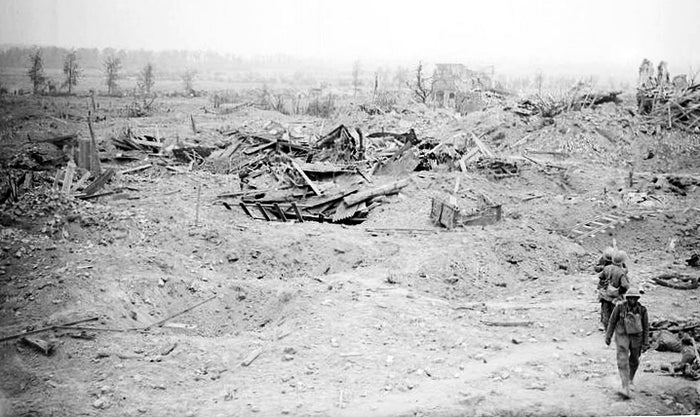
Messines was one of the British Army's most carefully prepared attacks of the First World War: deep mines, predicted artillery fire and limited objectives were combined to seize a ridge that had dominated the Ypres salient.
At 03:10 on 7 June 1917, a series of enormous mines exploded beneath German positions. Infantry then advanced behind a creeping barrage.
Why the ridge mattered
Messines-Wytschaete Ridge overlooked the southern side of the Ypres salient. Capturing it would improve Allied observation and create better ground for the offensive later known as Third Ypres.
The mining war
British, Canadian and Australian tunnelling companies spent months driving galleries beneath German positions. Nineteen mines exploded at the opening of the attack; others failed or were not fired.
Plumer's plan
General Herbert Plumer favoured a methodical battle with clearly defined objectives. Artillery, machine guns, tanks, aircraft and infantry were integrated around a timetable designed to destroy or suppress defences rather than rely on speed alone.
Explore this history
Continue from this Field Note into the closest Gallus campaign and military-history collection.
7 June
The explosions shattered sections of the German front and caused enormous casualties. Nine Allied divisions advanced behind the barrage and captured most initial objectives rapidly.
Consolidation
German counter-attacks continued for days, but the ridge remained in Allied hands. Engineers, artillery and reserve infantry turned the captured ground into a defensible position.
Why Messines worked
Preparation, surprise, overwhelming artillery and limited objectives all mattered. The result should not be treated as a universal formula; the terrain and tactical problem were unusually suited to a carefully staged assault.
The road to Third Ypres
Messines removed an important German position but did not solve the strategic problem around Ypres. The much larger offensive that followed is covered in Passchendaele 1917.
Continue exploring
Sources and evidence used
- National Army Museum — 1917: Year of Stalemate.
- British official history, tunnelling-company records and Second Army war diaries.
Related Field Notes
FROM THIS CAMPAIGN
World War 1



CONTINUE THE STORY
More from this campaign
Read it, reference it or wear it — the related pieces are kept together here.
CAMPAIGN COLLECTION
World War 1
Stay with this subject instead of being dropped back into the full catalogue.
Explore the collection →FIELD NOTES
Get new Field Notes by email
New research, campaign guides and useful references without a daily sales barrage.
