


Stalag Luft III: Complete POW Camp Field Guide — Sagan, Aircrew Captivity, Tunnels & Memory // Log 037
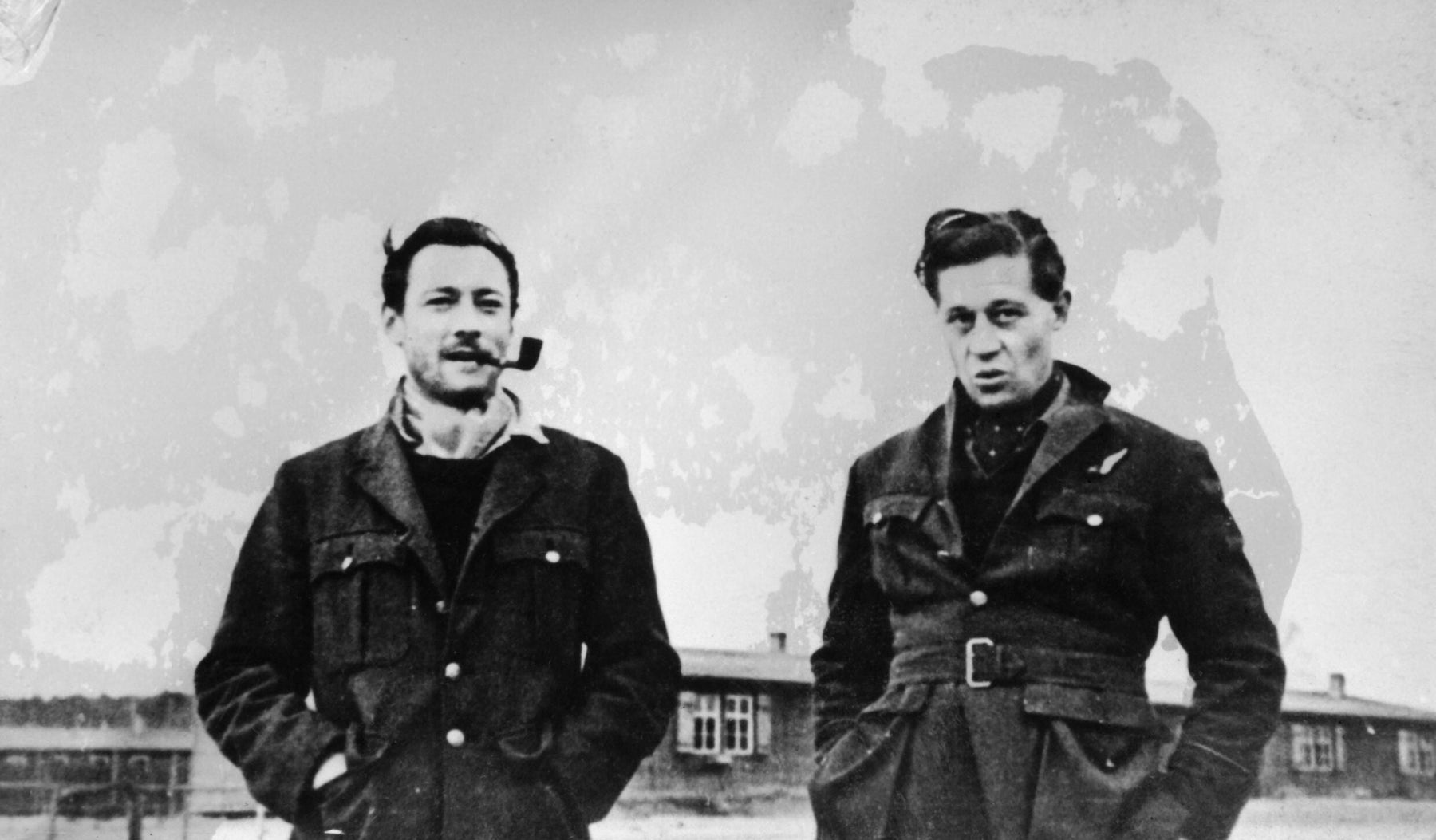
I approach Stalag Luft III through the practical problems of military organisation under constraint: routine, morale, observation, security, concealment, improvisation and the way people build systems when normal freedom of action has been removed. That is a service lens, not a claim to understand captivity from personal experience.
Stalag Luft III was not simply the setting for the Great Escape. It was a Luftwaffe-run prisoner-of-war complex at Sagan in Lower Silesia, now Żagań in Poland, where thousands of captured Allied airmen lived for years inside a contest between German containment and prisoner organisation.
Political and legal context
The camp existed inside Nazi Germany during a war in which the treatment of prisoners varied enormously according to nationality, service and the regime’s racial and political policies. Western Allied aircrew were formally covered by the 1929 Geneva Convention on prisoners of war. That legal framework established obligations over treatment, food, correspondence, discipline and repatriation, although actual conditions could still be harsh and deteriorated as Germany’s situation worsened.
The distinction matters because Stalag Luft III was administered by the Luftwaffe, not by the concentration-camp system. Its prisoners were enemy servicemen held as POWs. The later murder of fifty recaptured Great Escape officers was carried out through the Nazi security-police/Gestapo apparatus and constituted a grave breach of the protections owed to prisoners of war.
Where was the camp?
Stalag Luft III stood near Sagan, then in Germany. Today the site lies near Żagań, Poland. It was placed well inland from neutral borders and built on sandy ground in a pine-forest area. German planners believed the pale sand, cleared perimeter and raised barrack huts would make tunnelling easier to detect.

How the camp was organised
Stalag Luft III expanded from its first compounds in 1942 into a much larger complex. The East and Centre compounds were followed by the North Compound, which opened in 1943 and became the centre of the major British and Commonwealth escape organisation. Later compounds held growing numbers of American airmen as the Allied strategic air offensive intensified.
Each compound contained rows of wooden barracks, kitchens and communal facilities inside multiple fences, cleared warning zones and guard towers. German staff controlled the external security system; inside the compounds, prisoners developed their own disciplined administrative structures.
Camp command structure — German side
- Camp commandant: Oberst Friedrich Wilhelm von Lindeiner-Wildau until the aftermath of the March 1944 mass escape.
- Luftwaffe administration: responsible for camp discipline, rations, accommodation, roll calls and formal dealings with the Senior British Officer and other prisoner representatives.
- Security / Abwehr personnel: responsible for searches, escape detection, perimeter security, inspections and countermeasures against tunnelling.
- Guard force: expanded as the prisoner population grew and included Luftwaffe personnel, some of whom were older, recovering or rotated from other duties.

Prisoner organisation — inside the wire
The prisoners were not a shapeless mass. Compound staffs handled Red Cross food, clothing, education, recreation, mail, finance, medical matters and other daily functions. Barrack blocks had their own organisation. Senior officers represented the prisoners in dealings with the German administration.
Alongside that visible system ran covert activity: escape committees, forgery teams, intelligence collection, tailoring, map preparation, lookout systems and tunnel crews. The same camp could therefore contain a lecture, a theatre rehearsal, a sports match and an escape-security operation at the same time.
Roger Bushell and the X Organisation

Squadron Leader Roger Bushell, known as Big X, led the major escape organisation in the North Compound. His significance was organisational. The plan required hundreds of prisoners to work on tunnels, soil disposal, forged papers, civilian clothing, maps, intelligence and internal security without exposing the entire system when one component failed.
Tom, Dick and Harry were therefore not three clever holes in the ground. They were engineering projects embedded inside a covert organisation.
The security problem: how do you hide a tunnel?
The camp’s physical design made escape difficult. Barrack huts were raised from the ground, pale excavated sand contrasted with the darker surface layer, clear ground surrounded the compounds, and guards conducted searches and patrols.
Prisoners responded with engineering and deception. Bed boards and other timber became tunnel shoring. Improvised air systems ventilated underground workings. Small trolleys moved men and soil. Excavated sand was hidden, stored or dispersed. Lookouts tracked German security personnel so that work could stop before a search reached a vulnerable area.
From a military point of view, it was a continuing measure/countermeasure contest: every German improvement created a new problem for the prisoners; every prisoner method forced the security staff to adapt.
Daily life: captivity was the main experience
The Great Escape can distort the history if it makes every POW look like a full-time tunneller. Most of life in Stalag Luft III was captivity: waiting, roll calls, hunger, correspondence, uncertainty about family, living in crowded huts and trying to preserve a sense of purpose.
Prisoners built education programmes, libraries, theatre companies, music and sport. The National Archives records that Royal Navy officer Peter Butterworth helped establish the camp theatre. Performances improved morale and could also mask the noise of covert escape work.
Red Cross parcels were extremely important supplements to German rations. Warrant Officer George Thomson later wrote home from captivity telling his parents, “Please don’t worry about me; I am quite OK” and specifically thanked the Red Cross. The reassuring tone of POW correspondence should be read alongside censorship and the desire not to alarm families.
Intelligence from inside a prison camp
Escape was not the only covert activity. Flight Lieutenant Peter Gardner sent concealed intelligence messages home in ordinary correspondence. The National Archives preserves an example in which a tiny message on tracing paper was hidden behind a photograph and passed to British intelligence through his family.
Other prisoners used their specialist knowledge and contact with guards to gather information. This is an important correction to the idea that a captured airman’s military contribution simply stopped at the camp gate.
Chronology of Stalag Luft III
- March/April 1942: Stalag Luft III opens at Sagan for captured Allied air personnel.
- 1942–43: the camp expands as the number of Allied aircrew prisoners grows. Escape activity, intelligence work and compound organisation become increasingly sophisticated.
- 1943: the North Compound opens. Roger Bushell’s large escape organisation develops Tom, Dick and Harry.
- 29 October 1943: Oliver Philpot, Eric Williams and Michael Codner escape using the famous Wooden Horse tunnel. Philpot ultimately reaches freedom.
- 1943: tunnel Tom is discovered. Dick becomes unsuitable as the planned exit route but remains useful for storage and concealment. Harry continues.
- 24–25 March 1944: 76 prisoners get out through Harry before the escape is detected. The event is covered separately in Log 038 — The Great Escape.
- Late March–April 1944: most escapees are recaptured. Fifty are murdered by the Gestapo/security police on Hitler’s orders. Von Lindeiner is removed from command.
- 1944: escape activity is sharply constrained by the killings, while normal camp life and the air war continue to bring new prisoners.
- 27 January 1945: with the Red Army approaching, the camp is evacuated westwards in severe winter weather.
- 1945: prisoners are dispersed through other camps and routes until liberation and repatriation.
The Wooden Horse: proof that escape history started before Harry
On 29 October 1943, Oliver Philpot, Eric Williams and Michael Codner used a hollow gymnastic vaulting horse carried repeatedly into the exercise yard to conceal men, tools and excavated soil. The tunnel took months to build beneath the yard. The National Archives preserves Philpot’s recollection of breaking through and seeing a German guard looking inward toward the camp rather than at the escape point.
The episode matters because it shows that Stalag Luft III contained multiple escape cultures and methods. The March 1944 operation was the largest and most famous, but not the beginning of ingenuity at Sagan.
January 1945: the Long March
As Soviet forces advanced into Silesia, German authorities ordered the evacuation of Stalag Luft III. Thousands of prisoners were forced west in freezing conditions before being moved onward by rail or into other camps.
The RAF Museum’s Long March material uses POW diaries and correspondence to show the gap between the regulated routines of a fixed camp and the uncertainty of a winter evacuation. Cold, fatigue, shortages and the collapsing German transport system made the movement dangerous even though the prisoners were nearing the end of captivity.
Stalag Luft III and the laws of war
It is tempting to tell the camp story as a gentlemanly contest between ingenious prisoners and Luftwaffe guards. That is too neat. The Geneva Convention mattered and Luftwaffe camp administration generally operated within a recognisable POW framework, but the wider Nazi state remained capable of stepping outside that framework brutally. The murder of the Fifty after the Great Escape is the clearest example.
A responsible history therefore has to hold both facts at once: the daily administration of Stalag Luft III was not the same institution as a concentration camp, and the prisoners were still held by a dictatorship that ultimately murdered captured officers after a lawful attempt to escape.
The site today
Modern Żagań preserves the camp story through the Museum of Allied Prisoners of War, surviving foundations, the marked route of Harry and the memorial to the fifty murdered escapees. The physical site helps restore scale: the famous tunnel was one feature inside a much larger prisoner community that existed from 1942 into the final months of the war.
Related biographies
- Squadron Leader Roger Bushell — Big X and the escape organisation
- Colonel Friedrich von Lindeiner-Wildau — camp commandant
Related products
- WW2 Stalag Luft III Coordinates Graphic Tee
- Stalag Luft III Coordinates T-Shirt — Great Escape Heritage
Sources and further reading
- The National Archives — Roger Bushell and the Great Escape
- The National Archives — concealed intelligence from Stalag Luft III
- The National Archives — Wooden Horse and other POW escape stories
- RAF Museum — Stalag Luft III and the Long March
- RAF Air Historical Branch — Escape from Germany
- Wikimedia Commons — POW-drawn Stalag Luft III hut plan and licensing record
- Museum of Allied Prisoners of War, Żagań
I treat Stalag Luft III here as a POW camp and military-security system, not just as the setting for a film story. Where prisoner numbers, guard strength or camp dates vary between contemporary and later sources, I use qualified language rather than manufacturing precision.
