


Egypt 1798–1801: The Political Road to Alexandria — France, Britain, the Ottoman Empire & the Route to India // Log 020
The Battle of Alexandria in 1801 was the end-game of a campaign that had started three years earlier with a geopolitical gamble. Revolutionary France wanted to strike at British power without attempting an immediate invasion of Britain itself. Egypt offered a route toward the eastern Mediterranean, the Red Sea and ultimately the commercial system linking Britain to India.
But Egypt was not empty strategic space. It was an Ottoman province with powerful Mamluk elites, its own population and political structures. The French invasion therefore created not just a Franco-British contest, but a war involving the Ottoman Empire, local Egyptian power, naval control of the Mediterranean and the wider Second Coalition.
This article is the political parent for the Alexandria 1801 Field Note. The battle article follows the land campaign and fighting; this piece explains why British and French troops were there in the first place.
Why Egypt mattered
British wealth and strategy were increasingly tied to India. In contemporary British thinking, Egypt was important because it offered one of the shortest overland connections between the Mediterranean and the Red Sea. The National Army Museum later described Egypt as being seen at the time as the “master-key” to the trading nations of the earth.
French planners saw the same geography from the opposite direction. Establishing French power in Egypt could threaten British commerce, create pressure toward India and potentially open links with forces hostile to British rule there.
The French Directory and Napoleon
By 1798 Britain remained at war with Revolutionary France. Napoleon Bonaparte had become the Republic’s most famous general after his Italian campaigns. An expedition to Egypt offered the Directory several attractions: it applied pressure to Britain, expanded French influence in the Mediterranean and sent an ambitious general on a major overseas enterprise.
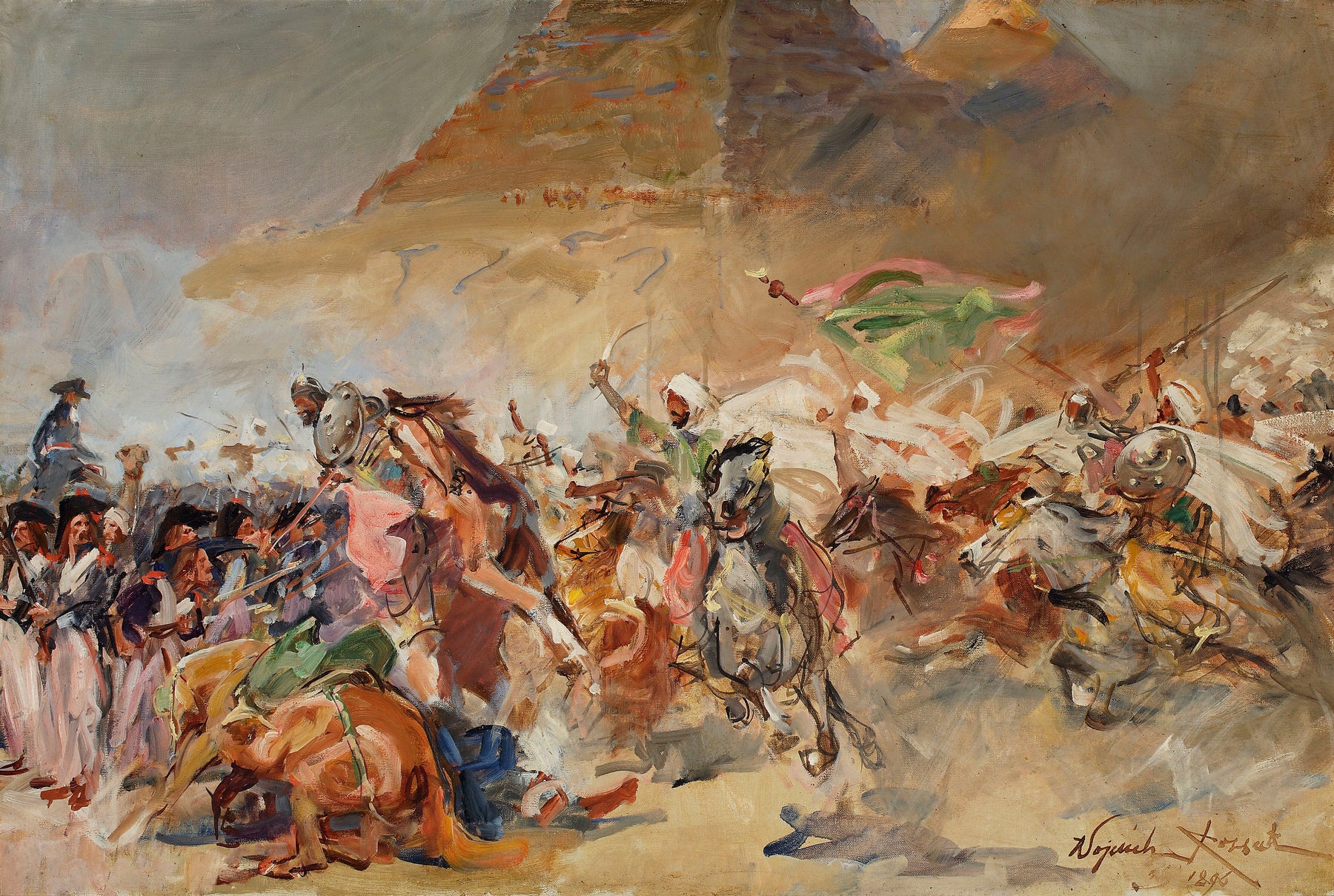
Napoleon sailed from Toulon in May 1798, captured Malta on the way and landed in Egypt in July. French forces defeated Mamluk armies near the Pyramids and occupied Cairo.
The campaign was presented in French proclamations as a struggle against Mamluk oppression rather than against Egyptians or Islam. That political messaging existed alongside the reality of foreign military occupation, taxation, resistance and violence.
Egypt was Ottoman territory
The Ottoman Empire had ruled Egypt since 1517, although Mamluk households retained substantial local influence. Sultan Selim III was already attempting military and administrative reform when France invaded one of his empire’s most important provinces.
The invasion overturned a long period in which France had enjoyed significant diplomatic and commercial relations with the Ottoman state. Istanbul moved into war against France and cooperated with Britain and Russia as the Egyptian expedition became part of the wider coalition conflict.
1 August 1798: Nelson changes the campaign
The most important strategic event after the French landing happened at sea. Nelson found the French fleet anchored in Aboukir Bay and destroyed or captured most of it at the Battle of the Nile.
The Royal Museums Greenwich record describes the effect as devastating to the French Mediterranean fleet. The military consequence on land was profound: Napoleon’s army was not instantly defeated, but it became much harder to reinforce, resupply or evacuate on French terms.
Egypt had shifted from an expedition supported by a fleet to an isolated continental foothold exposed to British sea power.
The Syrian expedition and Acre
In 1799 Napoleon moved into Ottoman Syria. The campaign included the siege of Acre, where Ottoman forces, supported at sea by British Captain Sir Sidney Smith, stopped the French advance. Disease and logistical pressure compounded the failure.
Napoleon returned to Egypt and defeated an Ottoman landing at Aboukir in July 1799. Yet the larger strategic problem remained: France did not control the sea.
Napoleon leaves Egypt
In August 1799 Napoleon left the army and returned to France. Within months he took power in the coup of 18 Brumaire and became First Consul.
Command in Egypt passed to General Jean-Baptiste Kléber. Kléber tried to negotiate an evacuation under the Convention of El Arish, but the arrangements collapsed. He then defeated an Ottoman army at Heliopolis in March 1800 and retook Cairo.
Kléber was assassinated in June 1800. Command passed to Jacques-François Menou.
Britain changes from blockade to expedition
British naval success had contained the French, but removing them from Egypt required troops on land. A major expedition was organised under General Sir Ralph Abercromby.
By early 1801 the political context had also shifted. France had strengthened its position in continental Europe after victories including Marengo and Hohenlinden, while Britain remained determined to remove the French base from Egypt. Anglo-Ottoman cooperation made a direct campaign possible.
Key political and strategic players

Commander of the 1798 expedition and the political figure most closely associated with the French occupation. He left Egypt in 1799 and seized power in France later that year.

British Prime Minister for most of the period. British strategy treated French control of Egypt as a potential threat to Mediterranean trade and the imperial connection with India.

Ottoman ruler when France invaded Egypt. His government moved from its previous relationship with France into war and coalition cooperation after the invasion of Ottoman territory.

His destruction of the French fleet at the Nile changed the strategic logic of the entire expedition by isolating the French army from reliable maritime support.
Why Alexandria became decisive
By 1801 the French army in Egypt was still capable of fighting, but its strategic position was narrowing. Britain could move forces by sea, work with Ottoman forces and attack the coastal base on which the French occupation depended.
Abercromby’s landing at Aboukir on 8 March 1801 began the final British land campaign. After fighting on 13 March, the British established a defensive position east of Alexandria. Menou decided to attack it before the British position became still stronger.
The result was the Battle of Alexandria on 21 March.
Continue to Log 021 — Battle of Alexandria 1801 →
